How to save on heating?
Optimizing the costs of managing an apartment or house is inextricably linked to paying attention to changes in heating costs. Considering today's technical and technological achievements, at least 8 basic steps can be proposed to reduce heating costs. Implementing these steps is essential or may prove helpful in reducing overall energy bills.
1. Insulating the building
The amount of bills will be determined by the building's demand for thermal energy. The age, condition of the building, size of windows, and number of external walls are factors that will affect heating costs due to the risk of heat escaping outside the building. Many apartments in Poland were built between 1960 and 1980, which increases their energy demand in light of the deteriorating condition of these buildings and their long-term use. Thermal modernization can allow for savings of up to 40% of total heating costs in this case.
Windows are particularly significant in thermal modernization, as they account for an average of 15% to 25% of heat loss in a building. Especially old windows, often found in tenement houses, have additional leaks that contribute to heat loss. Therefore, it is recommended to seal the windows or completely replace them with new ones. Finally, the so-called glazing ratio of the room, which is the relationship between the window area and the wall area, also affects the demand for thermal energy. A high glazing ratio leads to higher heating costs and an increased need for additional thermal modernization of the building.
2. Modern installation based on efficient heating devices
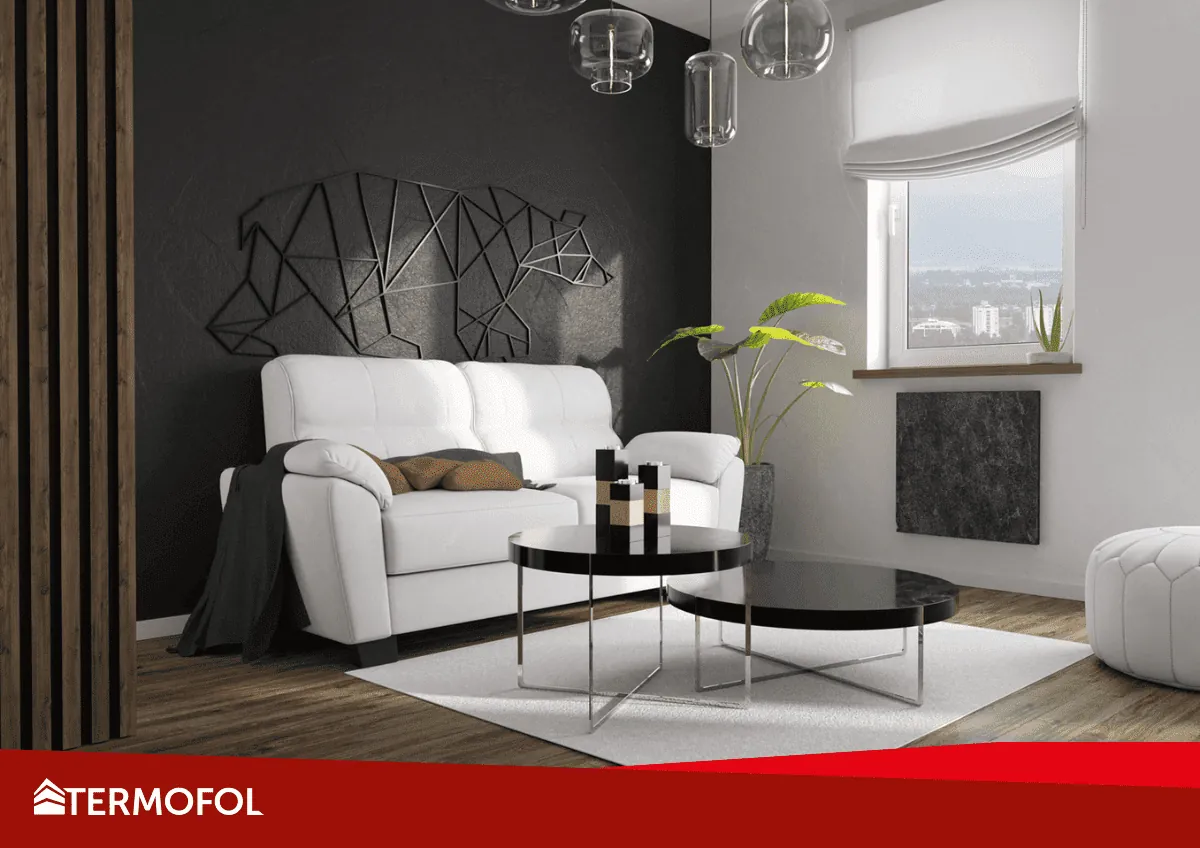
When thermal modernization of a building is undertaken, it is essential to consider solutions in the area of heating and ventilation. Both systems are correlated and thus affect heating costs. Recommended improvements include installing modern boilers and radiators (for convection heating), opting for ecological heat sources (especially photovoltaics), or installing an efficient ventilation system that guarantees heat recovery. A significant change in many homes and apartments can be choosing an infrared heating system due to its numerous advantages over traditional convection heating.
3. Heating - type and placement
Before selecting a heating system, the user should conduct a thorough audit of such an investment based on the diagnosed heat demand of the building and its rooms. If there is a lot of free space in the rooms, underfloor heating may not be applicable. In that case, it is advisable to choose a ceiling or wall installation.
Equally important is the proper insulation of the heating system from the ceiling or floor to ensure faster and more efficient heating of the entire area of the given room. When choosing underfloor heating, prior analysis of the insulation of the substrate and the overall insulation of the building itself is essential.
4. Underfloor heating
This solution is primarily cost-effective according to today's economic analyses. Underfloor heating guarantees high thermal comfort and low operating costs of the heating system itself. The cost of the installation pays off systematically through lower electricity bills. It is also significant that it eliminates convection (air movement) and ensures an even distribution of temperature in the room, which affects the overall comfort of all household members present in rooms heated this way. It is worth noting that Termofol offers modern underfloor heating systems that allow for a temperature reduction of up to 2 degrees Celsius while maintaining user comfort and reducing heating bills. For example, a room can maintain a temperature of 18 degrees Celsius, but users will feel the same comfort as if it were 20 degrees Celsius. Average monthly savings on heating costs can reach up to 16% on the bill.
The heating installation based on the heating film offered by Termofol operates at varying temperatures (in utility rooms – 29, and in bathrooms – 31 degrees Celsius). The installation of the appropriate flooring, which conducts heat well, can be a convenience. Among the best materials are floor panels, carpets, ceramic tiles, and stone.
5. Ventilation and humidity in the apartment
Optimizing the costs of managing an apartment is associated with preventing moisture from entering it. It is essential to maintain proper ventilation. Required actions include always cooking with a lid, limiting prolonged baths, and excessive water evaporation. In the above conditions, mechanical ventilation is recommended to minimize heat loss associated with ventilation.
6. The importance of airing
If you have a thermostat, which is a device that allows you to control the flow of hot water in the radiators to the temperature in the room, remember to “turn off” the radiators before starting the airing process. Ignoring this recommendation and cooling the room after opening the windows will cause the thermostat to increase the radiator's operation to maintain the desired temperature in the room. This, in turn, will increase heating costs. Therefore, it is advisable to air out briefly but intensively.
7. Optimal temperature in different rooms
A person needs a different temperature to maintain their high comfort depending on which room they are currently in. Utility rooms should guarantee between 20 to 21 degrees Celsius, while heating these rooms above this range risks heat loss when the outside temperature hovers around 0 degrees. In these conditions, it is crucial to use thermostats and limit heating in utility rooms where no people are present at the moment. At the same time, care should be taken to avoid excessive cooling of the apartment, as reheating it may take longer, thus generating higher heating costs.
8. Photovoltaics
A modern solution that influences the reduction of heating costs for a house or apartment is choosing photovoltaics, or solar heating. This is an example of so-called green energy based on a one-time investment in installing solar panels on the roof of the building or in the ground. Only in this way can the user ensure price stability for electricity, including producing and selling energy to the energy company when their installation generates more energy than the demand of the apartment or house requires. Photovoltaics guarantee freedom from expected, continuous electricity price increases, providing psychological comfort and financial security for the user in the long term. Utilizing modern photovoltaic solutions can be facilitated by taking advantage of Termofol's offerings, which has many years of experience in providing such solutions to its clients. Join the group of satisfied customers today.
 +48 12 376 86 00
  Downloads
  biuro@termofol.pl


 Blog Termofol
 Published: April 6, 2020
  Reading time: 5 minutes
 Heating