Air Conditioner as a Dehumidifier – an effective solution for comfort and health
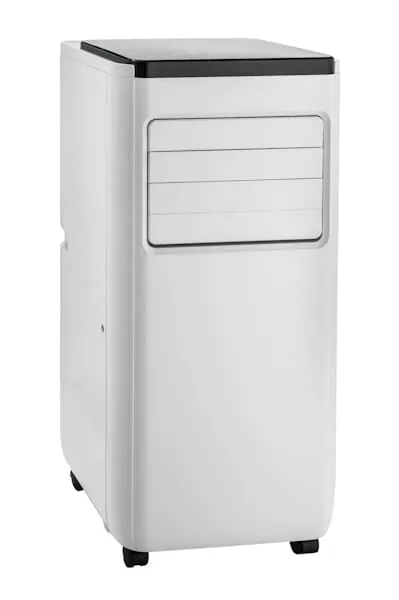
Portable air conditioners are commonly used for cooling air, but not everyone knows that they can also serve as a dehumidifier. Many modern models have a drying mode (Dry Mode), which effectively reduces humidity in the room without excessively lowering the temperature.
Excessive humidity can cause numerous problems – from discomfort, through the development of mold and dust mites, to damage to furniture and floors. Therefore, it is worth knowing how an air conditioner can help maintain an optimal humidity level in the home.
How does an air conditioner work as a dehumidifier?
During the operation of a portable air conditioner, air from the room is drawn in and passes through the cold evaporator coils, where condensation of water vapor occurs. The condensed moisture is expelled outside, and the dried air returns indoors.
Most air conditioners have two methods of operation regarding air dehumidification:
Passive dehumidification – during normal cooling operation, the air conditioner removes moisture from the air as a byproduct.
Drying mode (Dry Mode) – a special mode that minimizes the cooling effect, focusing on removing moisture from the air. In this mode, the fan operates at lower speeds, allowing for more effective condensation and expulsion of water vapor.
What are the benefits of dehumidifying air with an air conditioner?
- Improvement of thermal comfort
Humid air makes us feel the temperature as higher than it actually is. Dehumidifying the air can increase comfort even without additional cooling – especially in the summer months.
- Health protection and reduction of allergens
Excessive humidity promotes the growth of mold, fungi, and dust mites, which can cause allergies and health problems such as asthma or respiratory infections. Maintaining an optimal humidity level (40–60%) significantly limits their development.
- Protection of furniture and building structures
Prolonged exposure to excessive humidity can lead to deformation of wooden furniture, swelling of floors, and damage to walls. It can also accelerate the corrosion of metal elements inside the building.
- Reduction of energy costs
Dry air is easier to cool, which means that the air conditioner does not have to operate at full power to reach the desired temperature. This can save on electricity bills.
- Elimination of odors
High humidity promotes the formation of unpleasant odors, especially in poorly ventilated areas such as basements or bathrooms. Dehumidifying the air effectively eliminates the problem of mustiness.
Apartments and houses in humid climates – in areas with high humidity, e.g., by the sea.
Transitional season (spring, autumn) – when there is no need for intensive cooling, but humidity is high.
Rooms with poor ventilation – e.g., basements, closets, laundries, or bathrooms without windows.
In summer, when the temperature is not extremely high – sometimes reducing humidity is sufficient instead of cooling.
Air Conditioner or Dedicated Dehumidifier – What to Choose?
Although air conditioners effectively remove moisture, there are situations where a dedicated dehumidifier may be a better solution:
Criterion |
Air Conditioner with Dehumidifying Function |
Dedicated Dehumidifier |
Main Task |
Cooling and dehumidifying the air |
Only dehumidifying the air |
Effectiveness in Removing Moisture |
Average – depends on temperature and operating mode |
High – specifically designed for this purpose |
Cost of Use |
Higher – consumes more energy |
Lower – energy-efficient models |
Winter Use Capability |
Ineffective at low temperatures |
Can operate year-round |
Mobility |
Usually permanently installed |
Easy to move |
👉 If you only need occasional air dehumidification, an air conditioner with a Dry Mode may be sufficient.
👉 If humidity is a year-round problem, it is worth considering purchasing a dedicated dehumidifier.
How to Properly Use an Air Conditioner for Dehumidifying Air?
🔹 Activate the drying mode (Dry Mode) – most modern air conditioners have a special air dehumidifying function.
🔹 Keep the temperature at a moderate level – in drying mode, it is best to set the temperature 1-2°C lower than the ambient temperature.
🔹 Regularly clean the filters – dirty filters reduce the efficiency of the device and can cause health problems.
🔹 Ensure proper drainage of condensate – make sure the air conditioner effectively expels water outside or into a tank.
🔹 Don’t overdo it with dehumidifying – the optimal humidity level is 40–60%. Air that is too dry can cause health problems, such as irritation of the respiratory tract or dry skin.
Is It Worth Using an Air Conditioner as a Dehumidifier?
✅ Yes, if:
✔ You need occasional air dehumidification.
✔ You want to improve thermal comfort on hot days.
✔ You have a portable air conditioner with a Dry Mode.
❌ No, if:
✔ You are struggling with high humidity year-round.
✔ You are looking for an energy-efficient solution for long-term dehumidification.
Modern air conditioners are multifunctional devices that can both cool and reduce air humidity. However, if you have a serious humidity problem, it is worth considering investing in a dedicated dehumidifier.
Want to ensure comfort and healthy air in your home? Check out Termofol's offer and choose the best solution for you!
 +48 12 376 86 00
  Downloads
  biuro@termofol.pl


 Blog Termofol
 Published: April 12, 2025
  Reading time: 4 minutes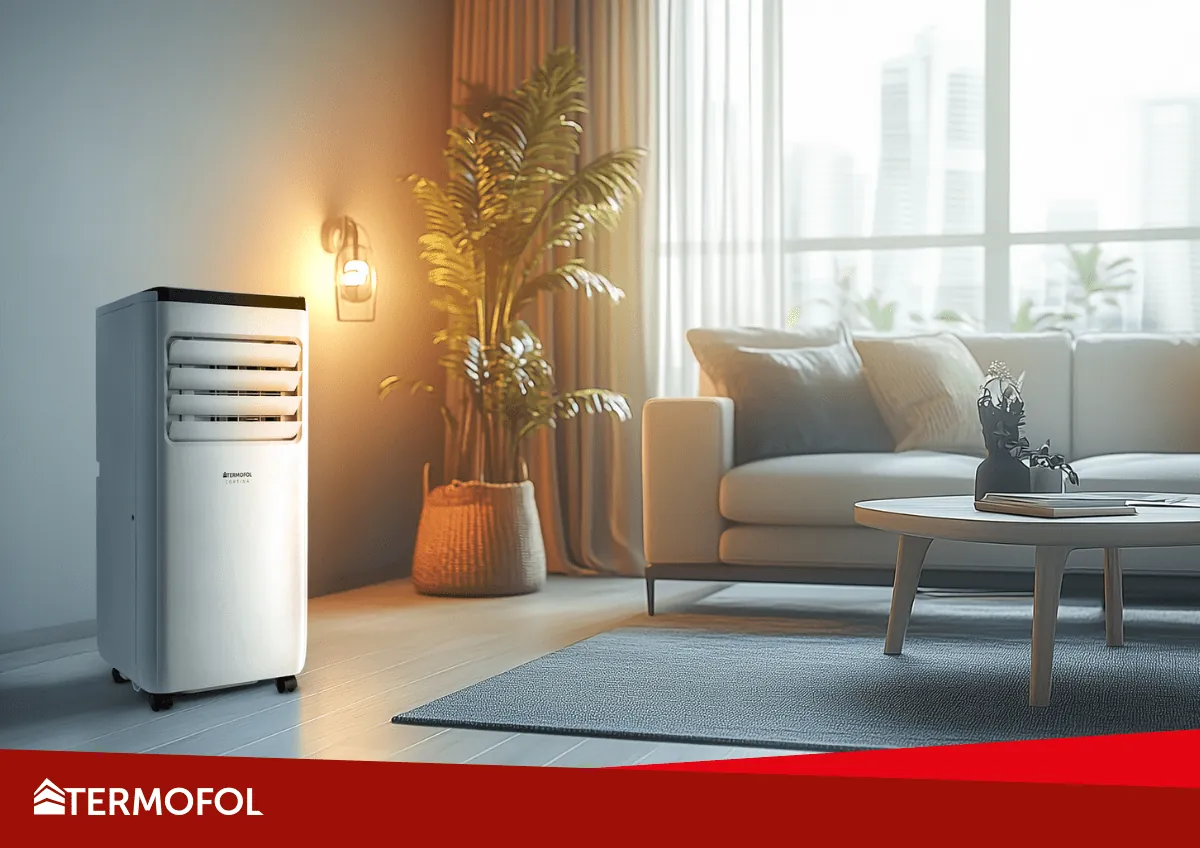
 General information