By installing heating film, the comfort of living in relation to heating the rooms in your house or apartment changes completely. However, if the film itself is the heart of the heating system, then the control system is the brain of this system. Proper regulation of the system's operation results in heating savings of up to 40% of annual costs, while maintaining optimal comfort for people in all rooms. A properly designed control system allows for effective management of temperature changes and, consequently, reduces the costs of heating the house or apartment. Above all, the user gains greater and direct control over the operation of the heating system, which serves as an alternative to the traditional central heating model.
Temperature Differences and Residents' Comfort
In every house, especially in multi-storey ones, temperature differences in rooms can be significant, affecting the comfort of the residents. Many factors contribute to such temperature disparities. One part of the house is always better lit than others, and it is impossible to change this state of affairs in a built structure. Differences in heat demand and heat losses also result from the number and arrangement of windows in relation to the so-called glazing index of individual rooms. This has an impact on heat losses, which can be cumulatively significant for managing the household budget in terms of heating costs. Finally, in some homes, additional heat sources, such as a fireplace, are installed, while the temperature in the room can also be significantly raised by a simple activity like cooking in the kitchen.
Thermostat as a Universal Heating Solution
The operation of a thermostat is a key to success in reducing overall energy bills in every home. Without a thermostat, the heating device generates heat continuously, which increases the operating costs of such a system and does not allow for reducing the total energy bills. On the other hand, controlling the amount of generated heat allows for direct influence on changing costs and heat demand at different times of the day, week, or season. In Termofol's offer, every customer can find various models of thermostats, ranging from basic manual settings to automatic control of generated heat via WiFi technology. When the temperature approaches the optimal value (often 21-22 degrees Celsius, depending on user preferences), the thermostat will automatically limit heat emission, which will reduce heating bills. The person does not have to worry about forgetting anything, as the planned task will be performed by the thermostat itself.
Thermostat and Individual User Needs
Each customer can independently regulate the operation of the thermostat and change its settings affecting the amount of generated heat. Instead of one sensor, as in central heating, the proposed heating system with film uses several independent thermostats that work in a connected control system. This allows household members to set the temperature freely in each separate room and have a direct impact on the costs of used thermal energy. Moreover, the more advanced the control system, the more individualized regulation it offers. Colloquially speaking: the customer knows what they are paying for.
Controlling Underfloor Heating
Termofol operates in the market with a diverse range of control systems dedicated to underfloor heating. Such systems have an external NTC sensor that effectively protects the floor from potential overheating. In the most advanced models, remote control of the thermostats working in a coordinated control system managing the temperature of both the room and the floor is possible. All that is needed is access to an application installed on a mobile phone; physical presence of the system user in the house is not required.
Termofol also offers simpler solutions in the form of thermostats that allow manual temperature adjustments. To change the desired temperature, simply turn the knob, and at the set time, the system will maintain that temperature value in the room or on the floor by itself.
 +48 12 376 86 00
  Downloads
  biuro@termofol.pl


 Blog Termofol
 Published: April 6, 2020
  Reading time: 4 minutes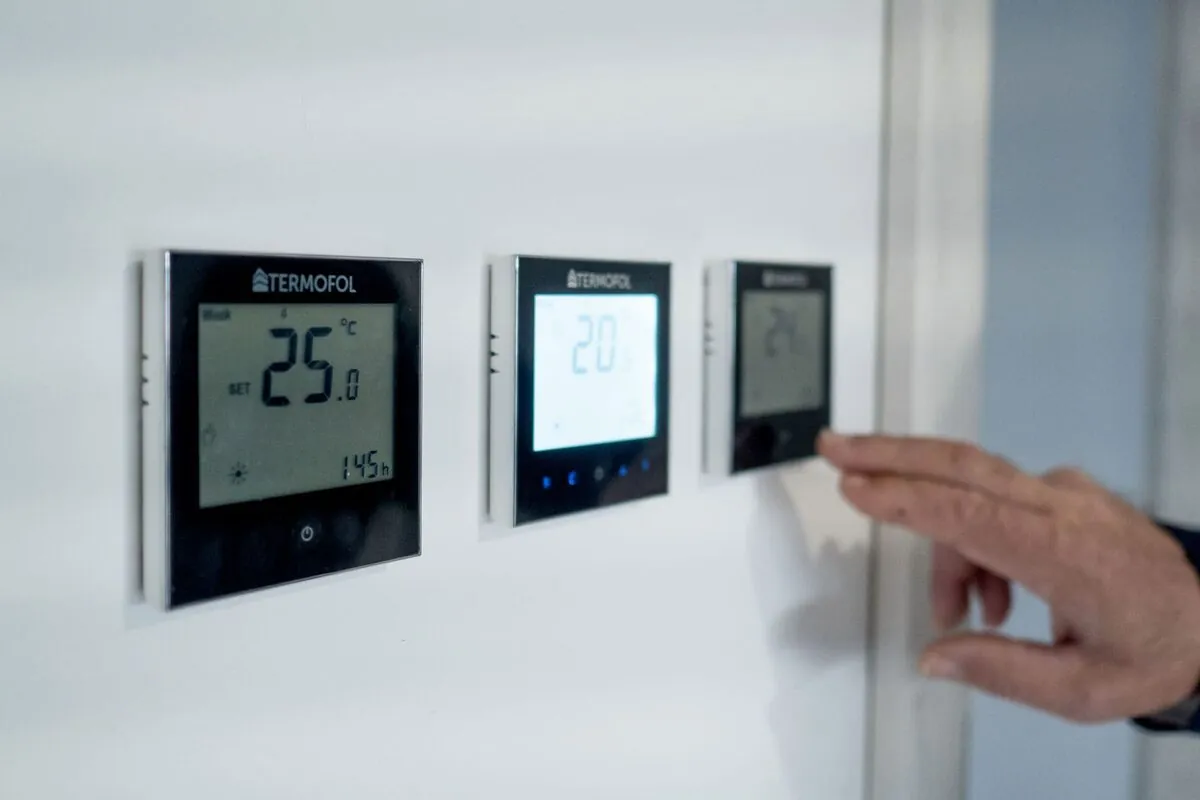
 Heating