The TERMOFOL heating film emits heat in the form of infrared radiation. The principle here is to heat the surface directly adjacent to the heating film, which releases the emitted heat to the surroundings in the form of infrared. This process reduces energy consumption and the time it takes to warm up a room compared to traditional convection systems. It also results in greater savings during the operation of the heating system and in the heating bills for the home or apartment.
Infrared Heating vs. Traditional Convection Heating
Heat rises in the room because warm air is less dense than cold air. In a traditional convection system, heat rises to the ceiling, causing the upper space to be heated more intensely. For the homeowner, this brings some unpleasant consequences. The body absorbs heat unevenly (the head receives more, while the feet receive significantly less during daily activities). Additionally, convection heating does not prevent dust from accumulating and circulating with the heated air masses in the room. Along with this, various types of pollen, bacteria, and dust mites are also transferred. Subsequently, the air from above gradually moves and cools down, flowing along the opposite wall to descend near the floor as cooled air, heading towards the radiator for further heating and restarting the circulation process. Heat loss in this process is difficult to eliminate and occurs naturally, which reduces the efficiency of the heating system itself, and the comfort of using such a system is low.
The innovative TERMOFOL heating film eliminates the drawbacks mentioned above. All emitted energy is retained in the heated surface, indirectly warming the people in contact with that surface. The temperature in the room is perceived by humans as higher than it actually is, which is a strong point of the offered infrared heating solution. The waves emitted by the heating film dry the walls and prevent the formation of mold due to surface dampness.
Safety of Using Infrared
Infrared (infrared radiation) is characterized by wavelengths between 780 nanometers and 1 millimeter and is emitted by any body with a temperature above absolute zero. All heated bodies are natural sources of infrared emission, starting from humans, through objects, to the Sun. Heating a home in this way is therefore completely safe, excluding any negative impact on the human body. Heating a room with infrared film causes the perceived temperature to be on average 2-3°C higher than in reality. This allows for improved comfort for residents and energy savings due to the lack of necessity to increase the heat in the room. The user also does not observe air movement, which distinguishes this system from convection heating, and it also prevents dust from being stirred up due to the operation of the heating system. This is a significant advantage, especially for allergy sufferers and those sensitive to pollen or dust.
The emitted heat waves also contribute to drying the walls, which consequently improves the insulating properties of the walls, as a dry wall insulates better than a damp one. As a result, the demand for heat decreases, and consequently, so does the heating bill for the home or apartment.
 +48 12 376 86 00
  Downloads
  biuro@termofol.pl


 Blog Termofol
 Published: February 12, 2020
  Reading time: 3 minutes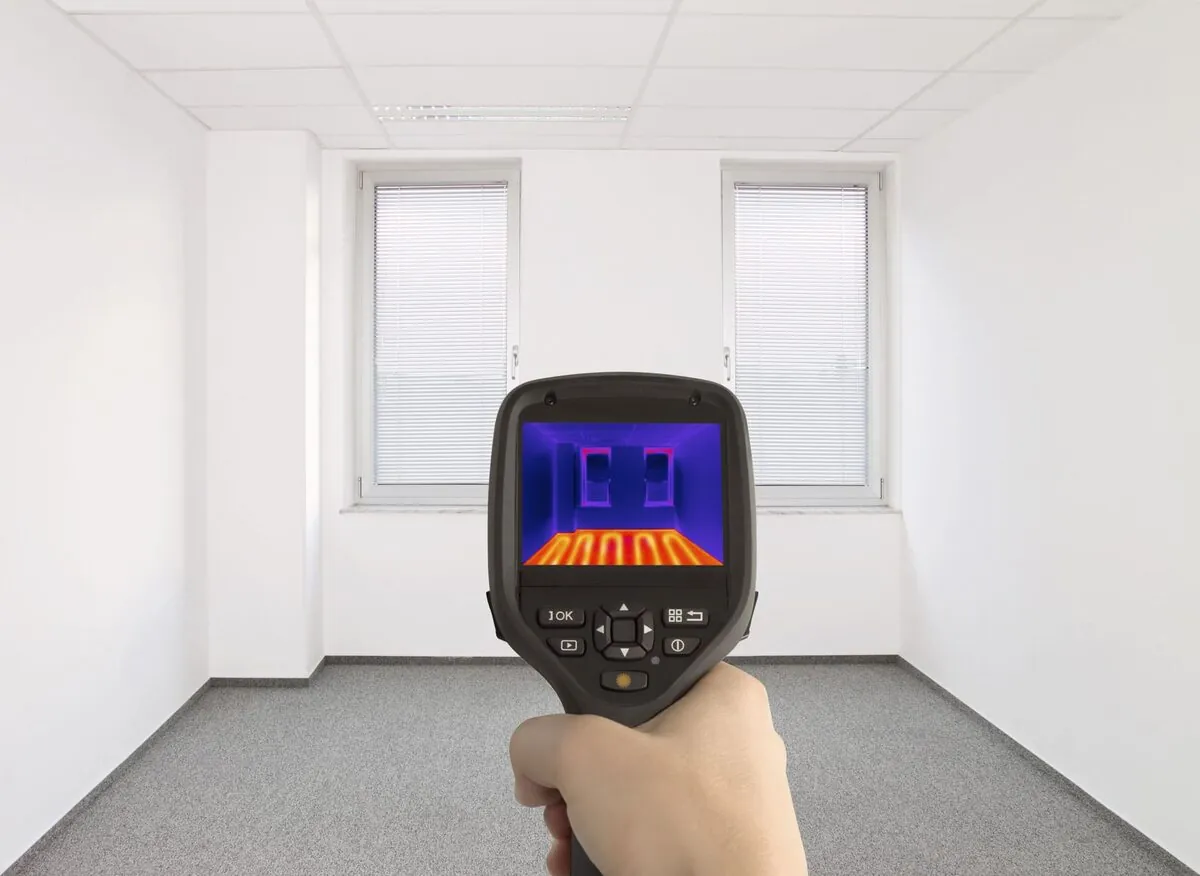
 Heating