Heating a Church
Every parish priest and administrator is well aware of the problem of cold walls and high energy bills. Churches and other sacred buildings are structures with enormous volume, often poorly insulated, with thick walls and high ceilings. Heating them in a traditional way is costly and often does not yield the expected results – the faithful still feel cold, even though the installation is running at full capacity.
What heating systems can be used in a church, and which ones are truly effective? Below we present a comparison of the most popular solutions – from air heaters, through underfloor heating and radiators, to modern heating panels for churches TF-MBG200.
Air Heaters
Quick effect, but high losses
Air heaters – electric, gas, or pellet – are one of the most commonly encountered solutions in churches. Their advantage is the quick effect – they raise the air temperature in the temple in a short time. The problem is that warm air immediately rises to the top. As a result, we mainly heat the ceiling, not the faithful sitting in the pews.
Noise and high operating costs
An additional downside of heaters is the noise, which disrupts concentration during services. Operation can also be expensive – one must account for significant consumption of gas, pellets, or electricity. In large buildings, heating costs can consume a significant portion of the parish budget.
Underfloor Heating
Comfortable, but difficult to implement
Underfloor heating provides an even distribution of temperature and high thermal comfort. The faithful feel pleasant warmth rising from the ground. Unfortunately, its application in churches is very limited.
Problem in historical buildings
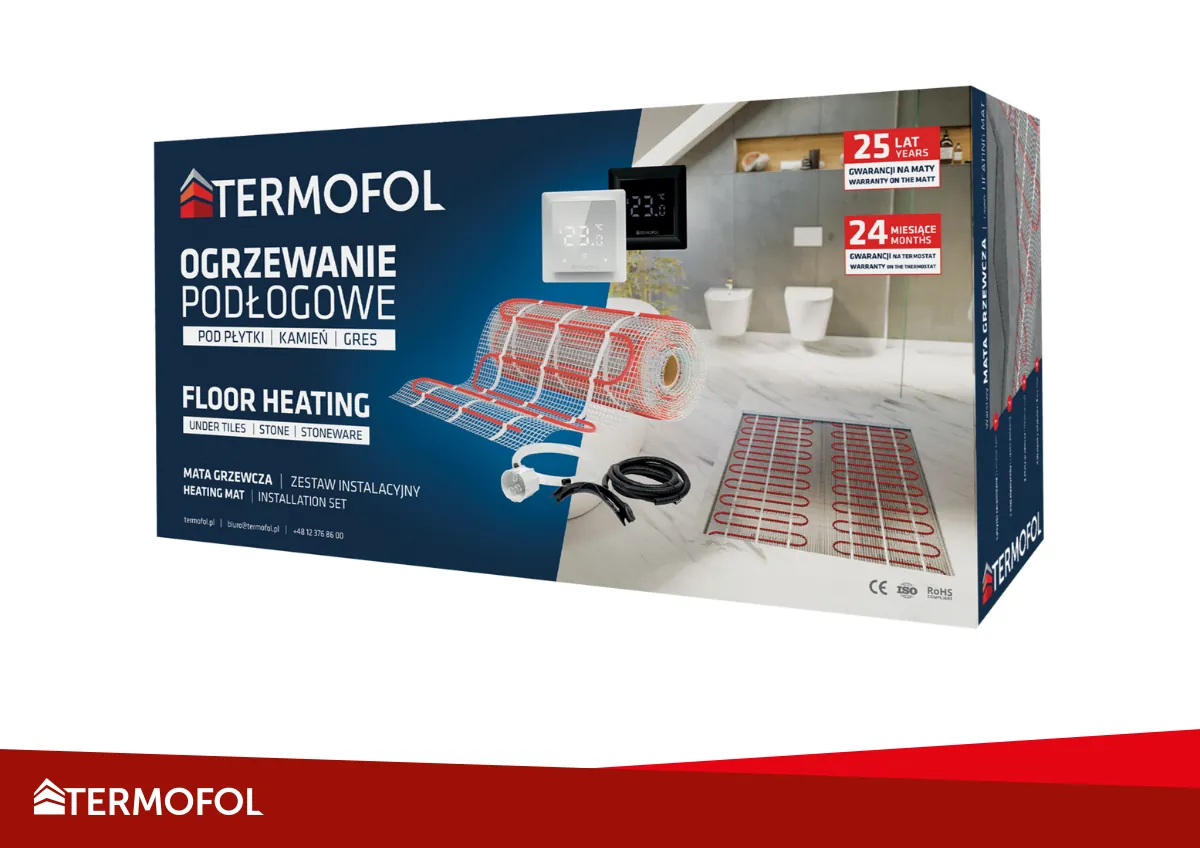
Installing underfloor heating requires intervention in the flooring. In new, modern churches, this solution works well, but in historical buildings, it is practically impossible – due to the preservation of the flooring, tombstones, crypts, and other architectural elements. A benefit for new constructions may be the quick installation of an electric underfloor heating system based on heating films and mats.
Infrared Radiators
Quickly felt warmth
IR radiators work differently than heaters – instead of heating the air, they emit infrared radiation, which directly warms people and objects. As a result, the faithful feel thermal comfort immediately after turning on the device, even if the air in the church remains cool.
Visibility of devices
However, their downside is visibility – radiators are usually mounted high on walls or columns. In modern churches, this does not pose a significant problem, but in historical churches, it may disrupt the aesthetics of the interior and require the consent of a conservator.
Heating Panels for Churches TF-MBG200
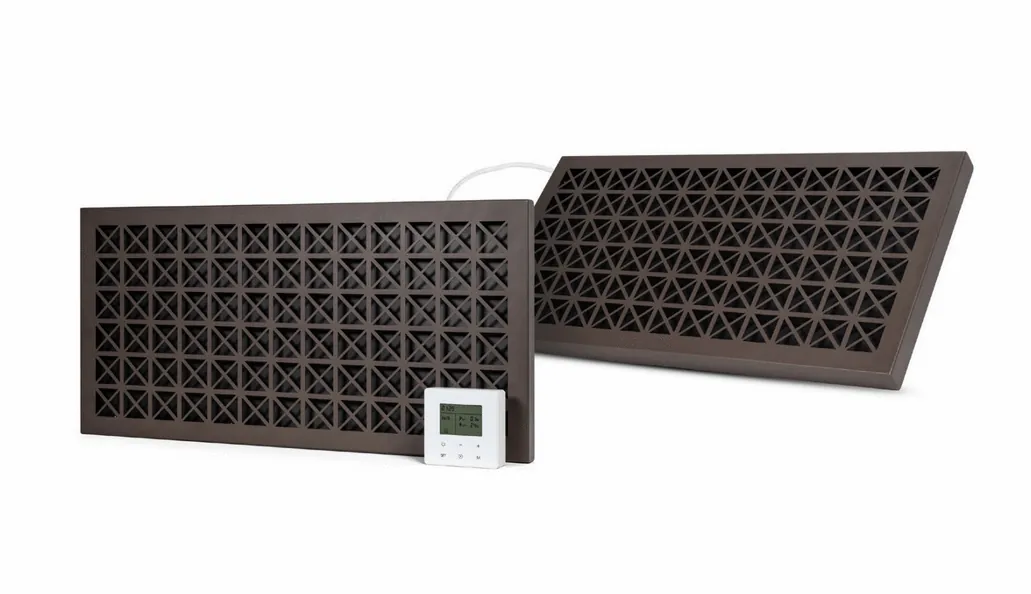
A modern alternative to the above systems is the TF-MBG200 heating panels from Termofol, designed specifically with the needs of churches and other sacred buildings in mind.
Discreet installation under pews
The panels are most often installed directly under the pews, making them completely invisible and not interfering with the character of the interior. They heat the faithful in the places where they sit, rather than the empty space under the ceiling.
Modular system
TF-MBG200 can be combined into sets – from one to five panels – and controlled centrally. This allows adjusting the heating power to the number of participants in the service. Low attendance? Just turn on a few panels. A solemn mass? The entire system operates at full power.
Energy efficiency and safety
Zone heating in the church means significant reduction in operating costs – instead of heating a volume of several thousand cubic meters, we deliver heat only where it is needed. The panels operate at low unit power (200 W), are energy-efficient, and have European safety certifications.
Each church heating system has its advantages and limitations:
- Heaters provide quick results but are noisy and costly.
- Underfloor heating is comfortable but difficult and expensive to install, especially in historical buildings.
- Infrared radiators provide comfort but are visible and interfere with the appearance of the interior.
- TF-MBG200 panels combine all the most important advantages: they are discreet, economical, and designed specifically for the needs of temples.
Thanks to them, heating a church becomes effective, comfortable, and safe – both for the faithful and for the architectural heritage.
👉 Choose TF-MBG200 heating panels – proven church heating across Poland.
 +48 12 376 86 00
  Downloads
  biuro@termofol.pl


 Blog Termofol
 Published: September 13, 2025
  Reading time: 4 minutes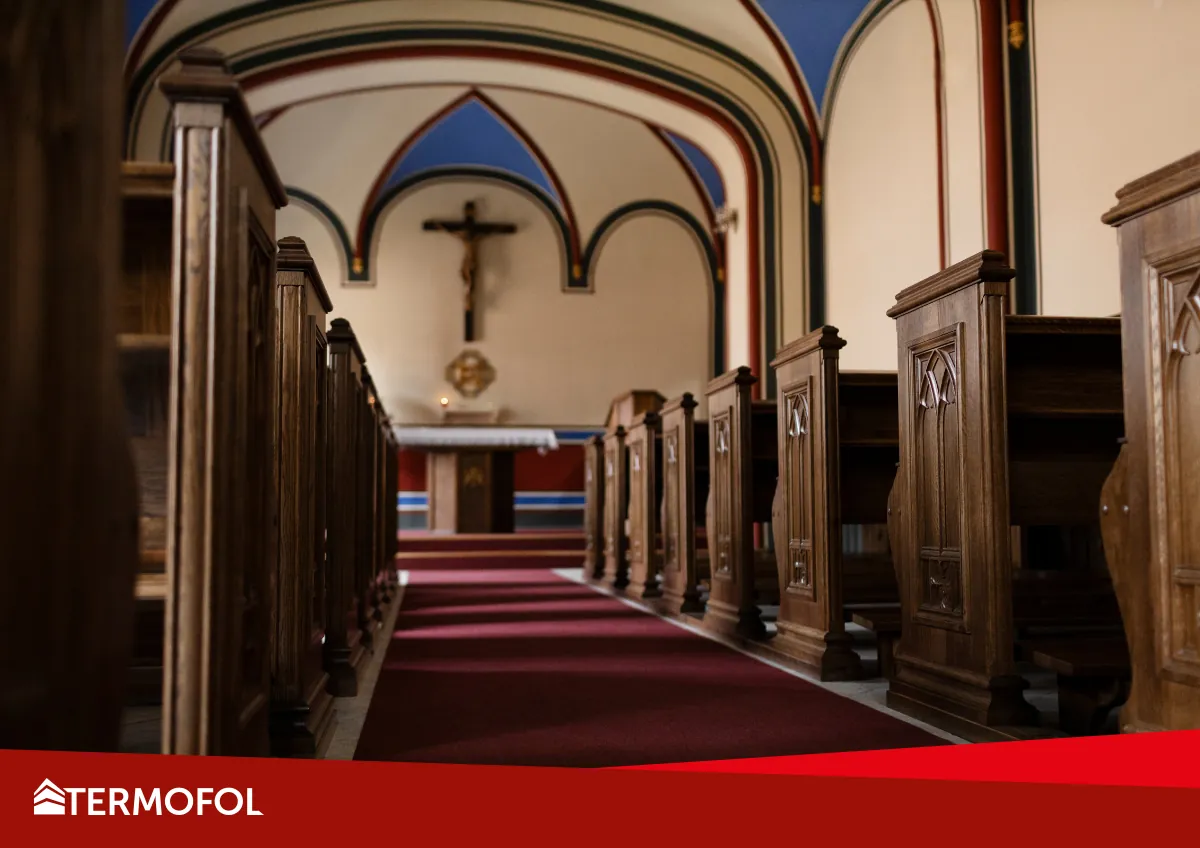
 General information