A heated driveway is no longer a luxury but increasingly a standard in modern construction. An electrically heated driveway eliminates the problems of snow removal, surface freezing, and slip risks, while simultaneously enhancing the safety of the entire property. In an era of growing investor awareness and pressure for reliable home infrastructure, heating installations for driveways are becoming one of the most practical solutions, especially in the conditions of the Polish climate.
Why is heating garage driveways becoming a standard?
An electrically heated driveway is a solution that minimizes the need for manual snow removal and ice removal. The system operates automatically – it activates when moisture and low temperatures are detected, keeping the surface safe without user involvement.
Practical benefits:
- no need for snow removal and salting;
- no slip risk for cars and pedestrians;
- protection of the surface from cracking and degradation;
- comfort and time savings, especially in winter.
In practice, a heated driveway is an investment that improves the functionality of the home for years while increasing the property's value.
How does electric driveway heating work?
Heating systems for driveways consist of:
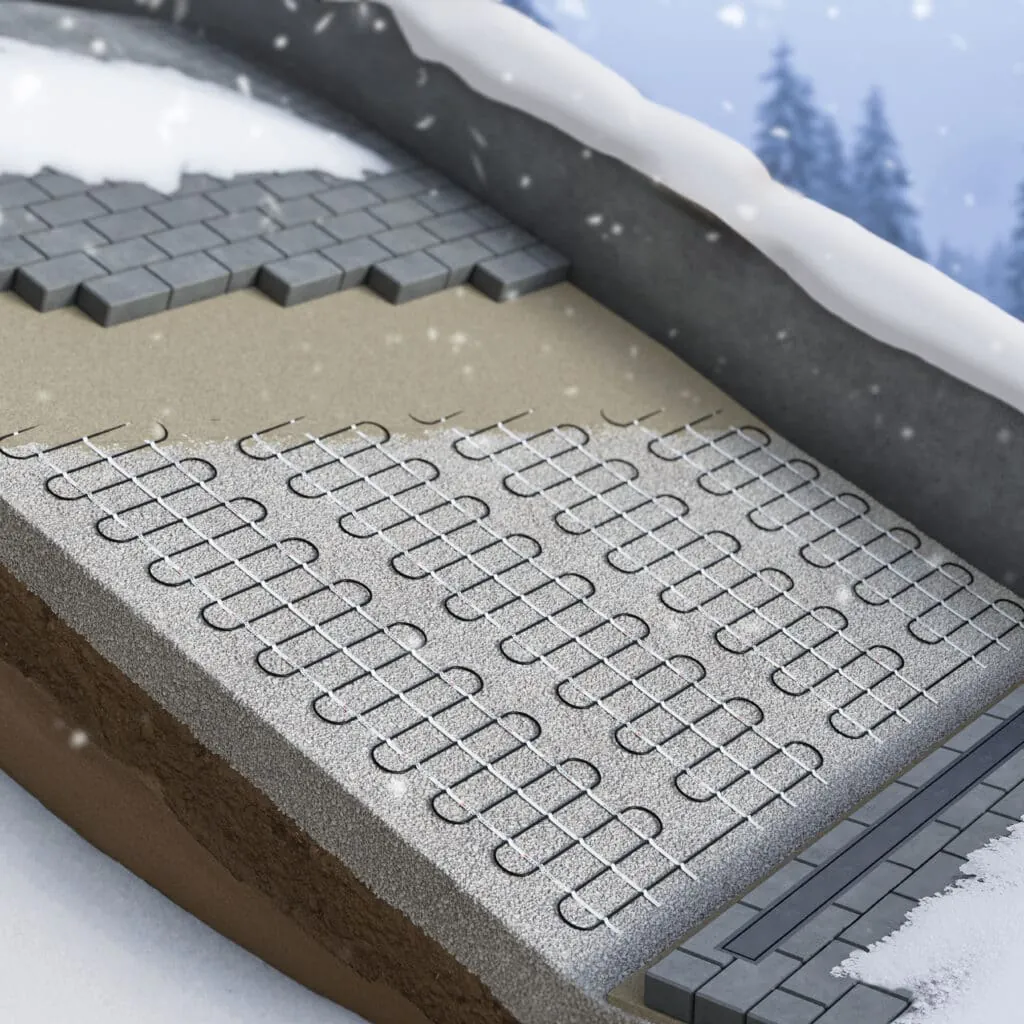
- Heating cables or heating mats – placed under the surface (cobblestones, concrete).
- Temperature and moisture sensors – detecting conditions conducive to ice formation.
- Controller – managing the operation of the system.
The system activates only when conditions require it, significantly reducing operating costs. This is a key argument for those considering issues such as heated driveway – operating costs.
Heating installations for driveways – technological variants
- Heating cables for driveways
This solution is recommended for unusual shapes and sloped surfaces.
- Outdoor heating mats
Ideal where quick installation and a repeatable heating layout are important. Mats guarantee excellent adhesion to the substrate and ease of installation under cobblestones or concrete.
How to create a heated driveway? – step by step
- Choosing a system
It is crucial to determine:
- the area of the driveway,
- the type of surface,
- the required heating power
- Preparing the substrate
Cleaning, leveling, preparing the bedding layer, and planning the installation.
- Installing heating cables or mats
The heating elements are laid symmetrically according to the design, maintaining distances that ensure even heating.
- Installing sensors and the controller
Moisture and temperature sensors are installed in the driveway surface or near the surface.
- Surface
The system is covered with a final layer: cobblestones, slabs, or concrete.
- Testing and acceptance of the installation
Mandatory resistance check and correctness of connection.
Heated driveway – installation and operating costs
The cost of installation depends on:
- the area,
- the type of system (mat/cable),
- the heating power,
- the type of control
Operating costs – facts instead of myths
The system mainly operates during snowfalls and freezing rain. In practice:
- it usually operates from 20 to 60 days a year,
- energy consumption is optimized by weather controllers,
Systems using TF-ICE MASTER stand out for their high efficiency and quick heating, which reduces total working time and operating costs.
Why choose the TF-ICE MASTER system?
Termofol has been specializing in electric heating systems for years, and the TF-ICE MASTER line was created with:
- typical conditions of Polish winters in mind,
- failure-free operation for years,
- maintenance-free, automatic operation of the anti-icing system,
- low operating costs with high efficiency.
Advantages of the TF-ICE MASTER system:
- high quality of workmanship, full technical support
- compatibility with various finishing materials for the driveway (cobblestones, concrete, etc.),
- easy expansion of the system with additional heating zones controlled from a single controller
- security confirmed by tests and certificates,
- quick installation.
The ICE-MASTER system is the most advanced solution on the market in the category of heating garage driveways.
Heated driveway – frequently asked questions by investors
Are heating installations for driveways safe?
Yes – the cables and mats are fully waterproof, have high insulation classes, and are designed for ground operation.
Does the heated driveway work all the time?
No – the system activates automatically only when it detects moisture and low temperatures.
Can an electrically heated driveway be installed on an existing surface?
Yes, but it requires partial dismantling or the creation of a new structural layer.
Heating garage driveways is a functional, safe, and increasingly cost-effective solution. An electrically heated driveway eliminates the risk of icing, increases the comfort of daily use, and protects the surface from damage.
Combined with modern systems like TF-ICE MASTER, the investor gains a durable, energy-efficient, and user-friendly installation. If you are planning to build a driveway or modernize your property, a heated driveway is one of the most practical investments for years to come.
 +48 12 376 86 00
  Downloads
  biuro@termofol.pl


 Blog Termofol
 Published: December 17, 2025
  Reading time: 4 minutes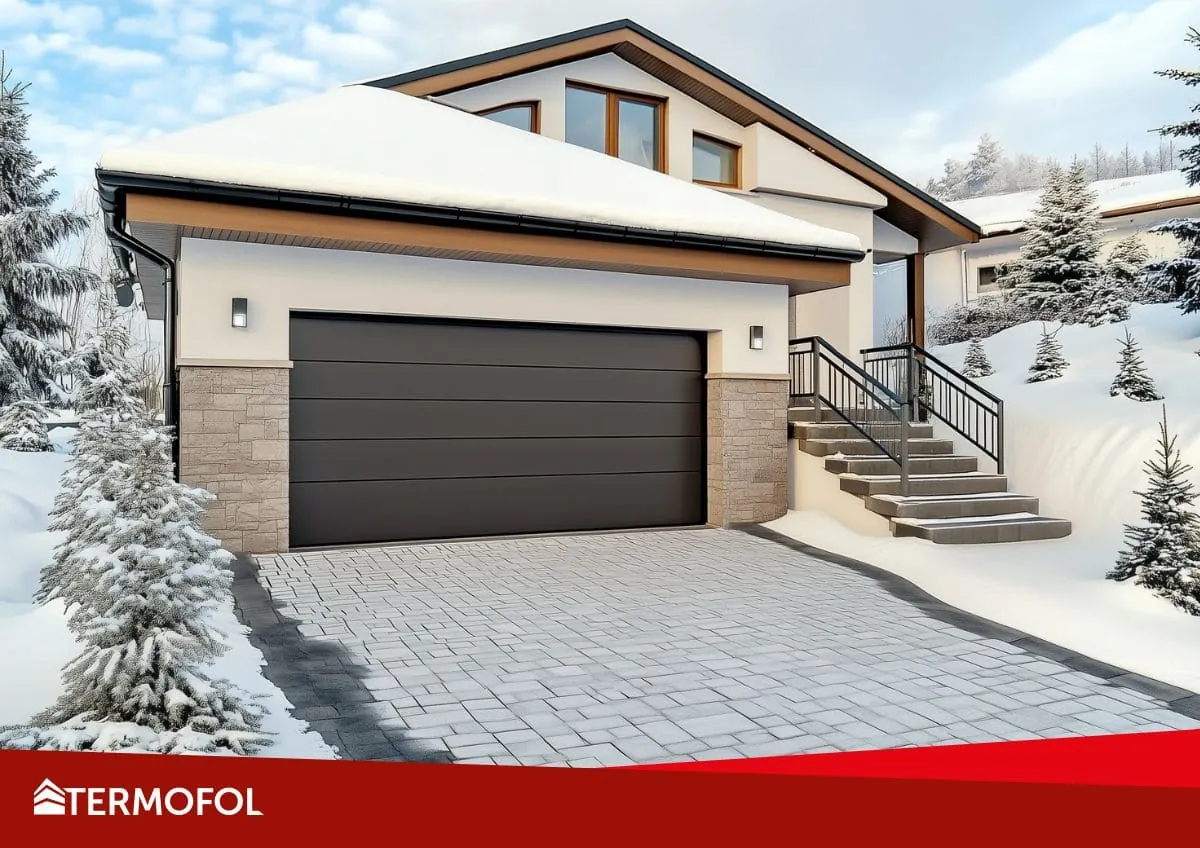
 General information