Modern Underfloor Heating or Classic Radiators?
Choosing a heating system is one of the most important decisions when building a house or renovating an apartment. Until recently, traditional radiators connected to a central heating system were the standard. However, more and more investors are now opting for heating mats and electric underfloor heating, which better meet the needs of modern construction.
User expectations have changed. Comfort, aesthetics, the ability to intelligently control temperature, and the integration of the heating system with photovoltaic installations have become increasingly important. This is why electric underfloor heating is becoming a viable alternative to classic central heating systems.
How Does Traditional Central Heating Work?
Classic central heating relies on a heat source, such as a gas boiler, heat pump, or solid fuel stove. Heated water is distributed through a hydraulic system and radiators placed in the rooms. This solution has been used for many years, but it also has its limitations.
In traditional systems, temperature distribution is uneven. It is usually warmest near the radiator, while the floor remains noticeably cooler. Warm air naturally rises, which means thermal comfort is not always optimal. Additionally, radiators take up space and affect the interior design.
In older installations, there are also issues related to maintenance, such as bleeding the system, servicing the boiler, or periodic inspections of the installation.
How Do Heating Mats Work?
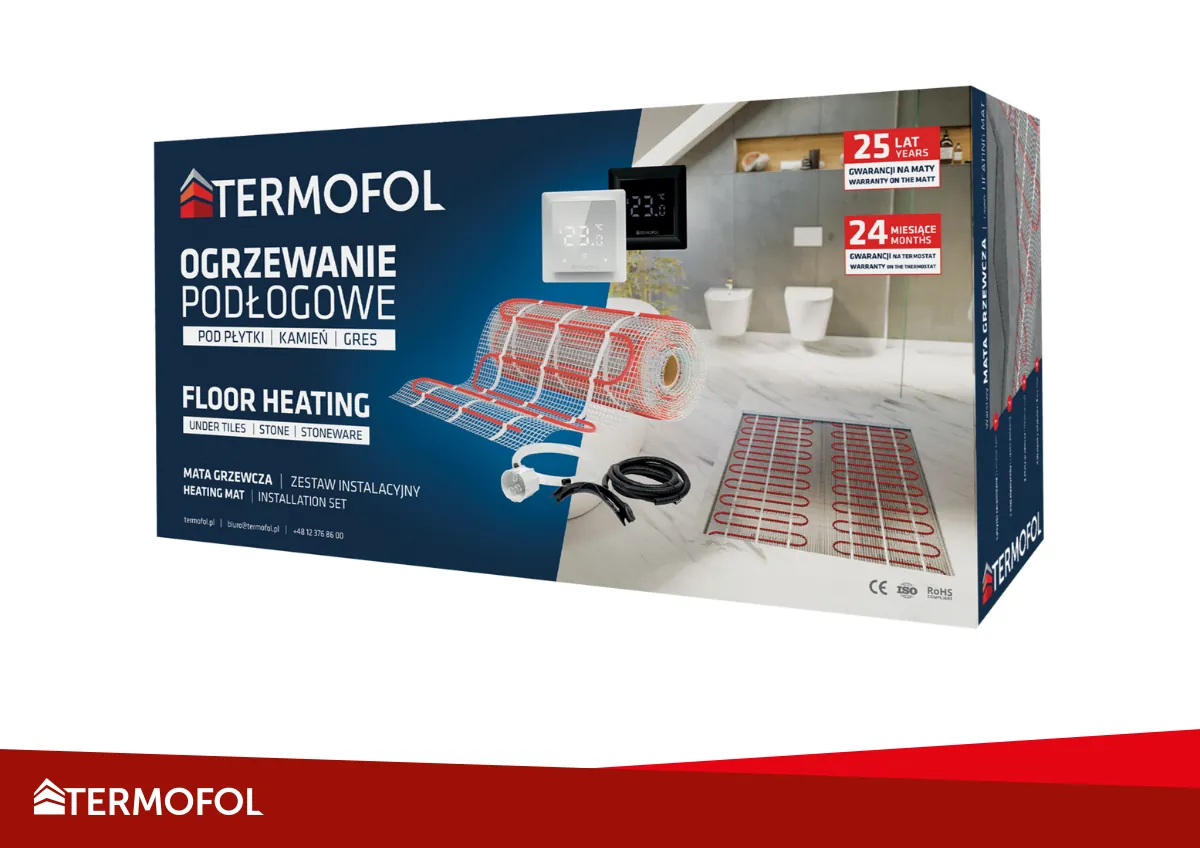
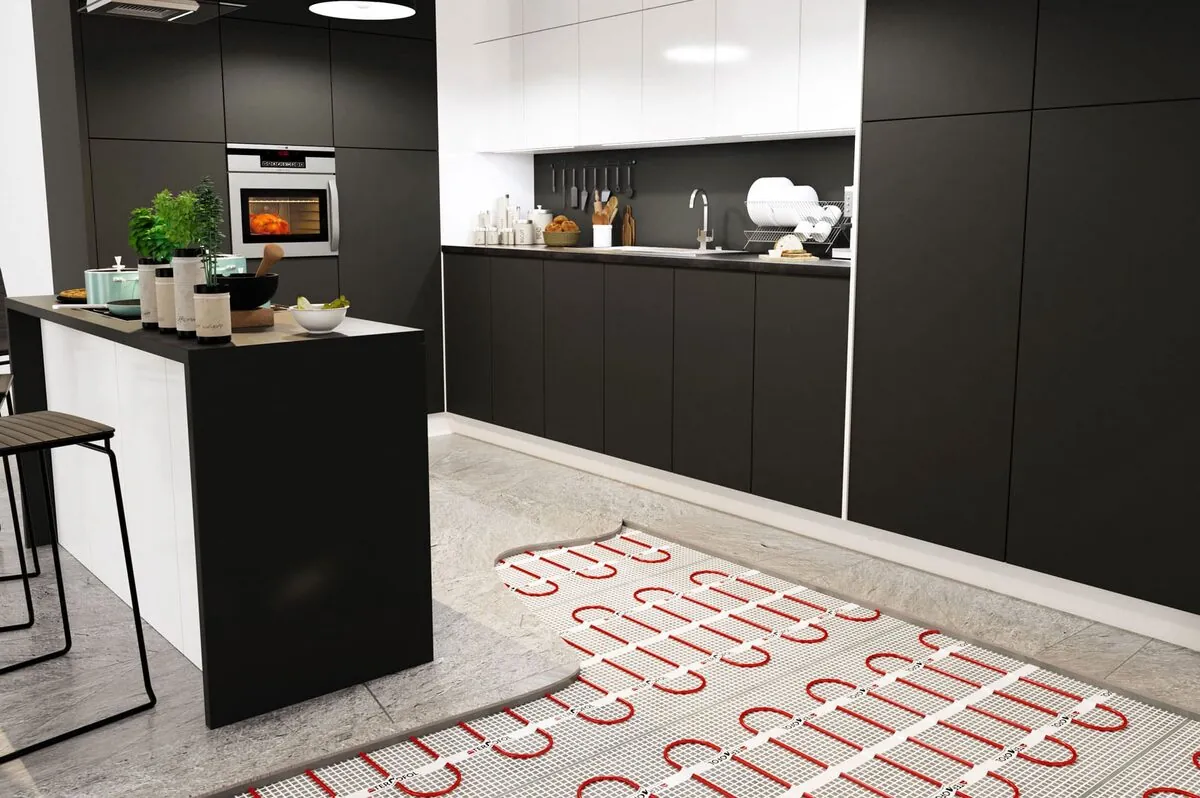
Heating mats are a modern electric heating system installed directly under ceramic tiles or other floor finishes. The heating cable is placed on a special mounting mesh, significantly speeding up and simplifying installation.
The system works by evenly radiating heat from the floor upwards. This allows for a much more natural temperature distribution in the room compared to classic radiators. The floor remains pleasantly warm, and the entire interior heats up evenly.
The modern TERMOFOL heating mats are practically invisible after installation and do not require extensive hydraulic installations or space for a boiler room.
Thermal Comfort – The Biggest Advantage of Underfloor Heating
One of the biggest advantages of heating mats is the way they radiate heat. In traditional heating, the highest temperature is usually found near the ceiling and close to the radiator. In underfloor heating, the situation is reversed — the most pleasant warmth is felt where the residents spend their time daily.
The even distribution of temperature significantly improves the comfort of using the rooms. This is particularly noticeable in bathrooms, living rooms, and children's rooms, where a warm floor enhances the daily comfort of the residents.
Heating mats also eliminate the problem of cold spots and overheating around radiators. In practice, the temperature is more stable, and the interior becomes more pleasant to use.
Aesthetics of Modern Interiors
Modern interior designs increasingly embrace maximum minimalism and the absence of visible installation elements. In the case of classic radiators, space arrangement can be limited by the need to leave room along the walls.
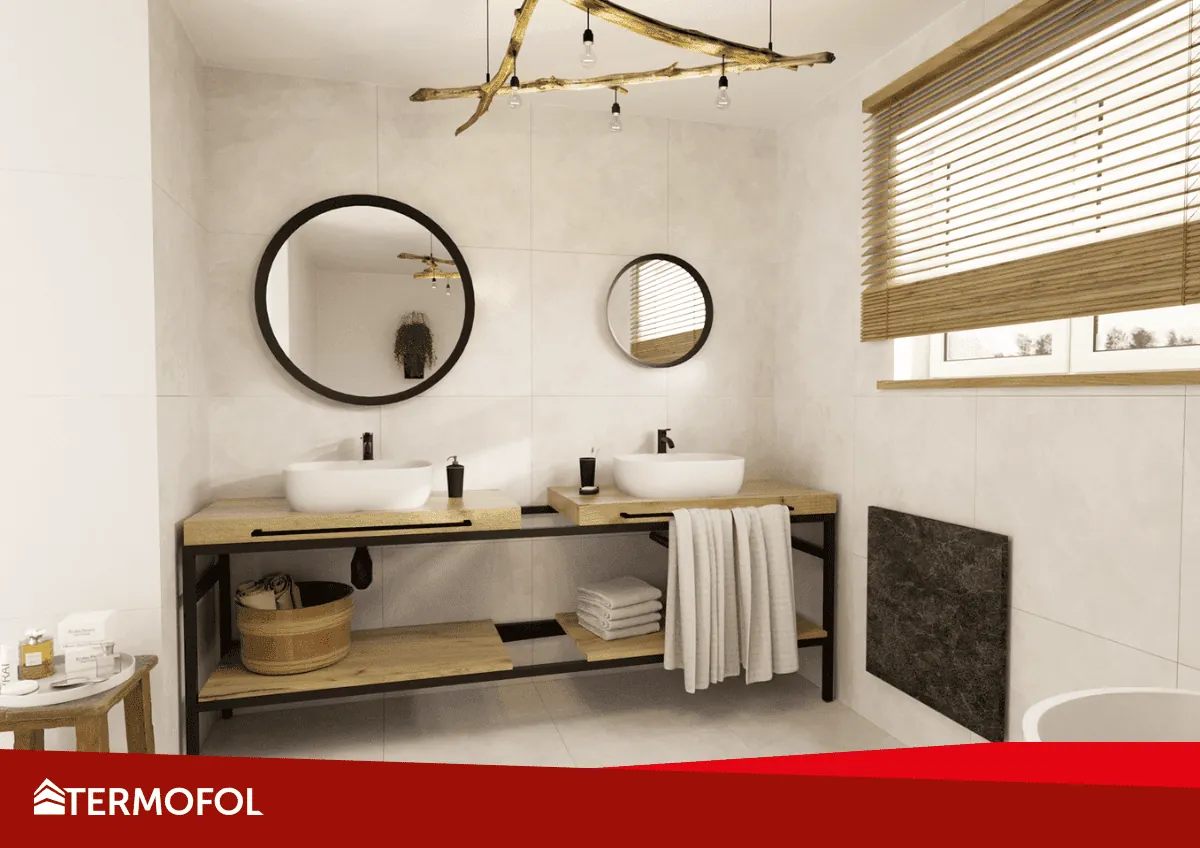
Heating mats remain completely hidden under the floor, making the interior look more modern and aesthetically pleasing. The absence of radiators allows for greater design freedom and better utilization of usable space.
This is why underfloor heating is often used in modern apartments, premium homes, and minimalist architectural designs.
Investment Costs – What is More Cost-Effective?
Installing traditional central heating usually requires building extensive infrastructure, including a heat source, hydraulic installation, distributors, pipes, and radiators. This generates relatively high investment costs, especially in new buildings.
Heating mats are much simpler in this regard. The system does not require a boiler room, pipes, or complicated hydraulic work. Modern TERMOFOL DIY kits further simplify installation and reduce execution costs.
This solution is particularly effective during apartment renovations and bathroom modernizations, where quick installation and minimal interference with the floor structure are essential.
Is Electric Heating Expensive?
This is one of the most frequently asked questions. Just a few years ago, electric heating was indeed associated with high operating costs. However, the situation has changed significantly.
Modern energy-efficient construction, good building insulation, and intelligent temperature control have greatly altered the functioning of electric systems. WiFi thermostats also play a significant role, allowing for precise temperature control and reducing energy consumption when rooms are unoccupied.
More and more investors are also combining heating mats with photovoltaic installations. This solution helps lower operating costs and increase the energy independence of the building.
When Are Heating Mats the Best Choice?
Heating mats work excellently in bathrooms, kitchens, renovated apartments, and modern energy-efficient homes. They are also very popular as comfortable heating for selected rooms.
This solution is particularly appreciated by those who expect a modern interior appearance, the comfort of warm floors, and a simple, maintenance-free heating system.
Traditional central heating remains a popular solution; however, modern heating mats offer many advantages that are significant for contemporary construction. They provide a more natural temperature distribution, improve the comfort of interior use, and allow for the complete elimination of visible radiators.
With easy installation, compatibility with photovoltaics, and modern heating control systems, electric underfloor heating is becoming an increasingly popular choice in both new investments and during renovations of apartments and houses.
 +48 12 376 86 00
  Downloads
  biuro@termofol.pl


 Blog Termofol
 Published: May 14, 2026
  Reading time: 5 minutes
 General information