Electric underfloor heating is becoming an increasingly popular solution in apartments — both new and renovated. It provides comfort, even heat distribution, and full control over the temperature, without the need for boiler or wall radiator installations.
The following guide shows how to plan underfloor heating in your apartment step by step, choose the right heating film or mat, and select the appropriate thermostat.
Can electric underfloor heating be installed in an apartment?
In most cases — yes.
Heating films and heating mats from Termofol can be used in blocks, tenements, and apartments because:
- they have minimal thickness,
- they do not require raising the floor, and do not overload it,
- they do not interfere with the water installation,
- they can serve as the main or additional source of heating.
- As an additional source of heating, they can operate independently of the main heating, e.g., water heating.
It is only worth ensuring that the apartment's electrical installation allows for the installation of electric heating.
Heating Zones – Division of the Apartment
One of the key elements in planning underfloor heating in an apartment is defining zones, i.e., rooms or parts of rooms that will be heated independently of each other.
Most commonly chosen zones:
- living room,
- bedrooms,
- hallway,
- bathroom,
- kitchen (excluding built-in furniture),
- office or study.
Thanks to the division into zones, each area has its own thermostat, which allows:
- to set the temperature independently,
- to reduce energy consumption,
- to adjust the level of heat to the function of the room.
Where should the film not be installed?
- under cabinets and kitchen fittings,
- under the kitchen island,
- under beds without clearance,
- under large household appliances.
Film or Heating Mat? How to Choose?
The type of heating is selected depending on the type of room and floor finish.
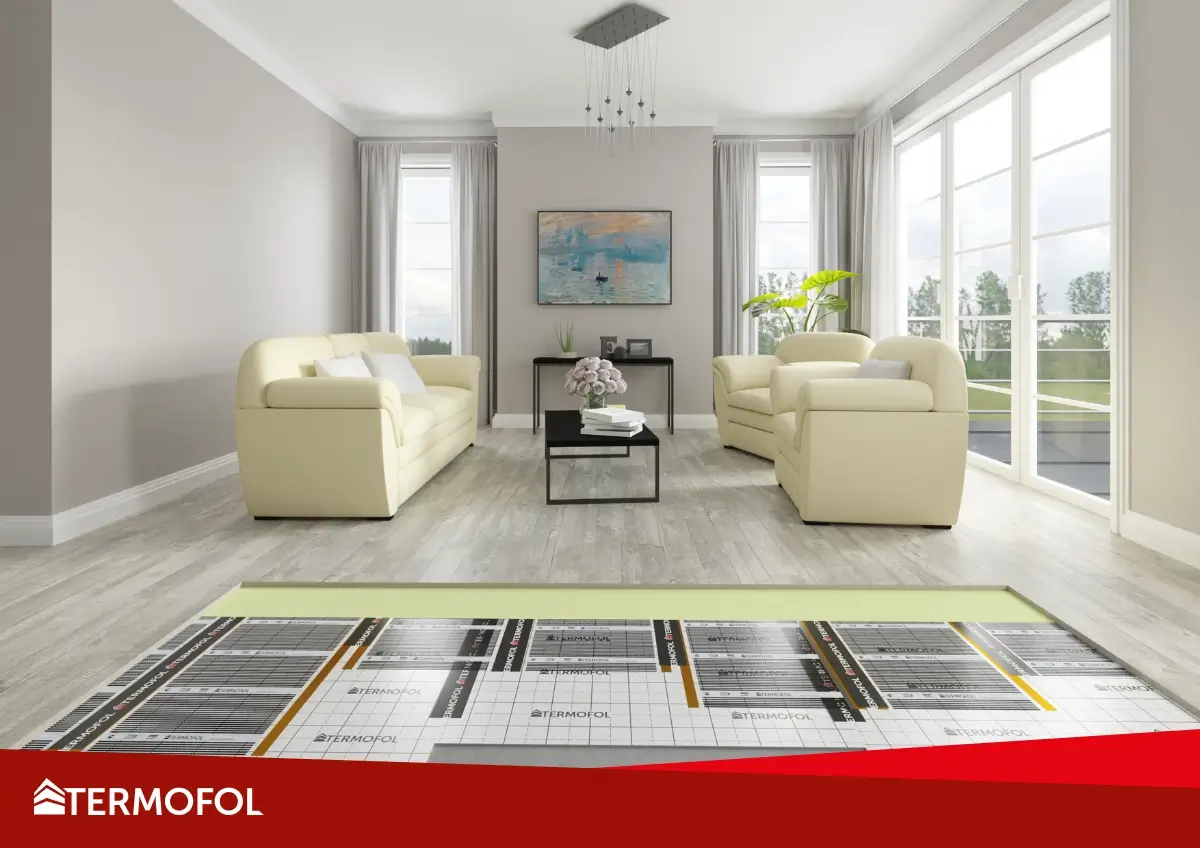
Heating film — best under panels and boards
It works well in:
- living rooms,
- bedrooms,
- children's rooms,
- offices.
Advantages:
- minimal thickness,
- instant response to temperature changes,
- easy installation during renovation.
Heating mat — choice for the bathroom and under tiles
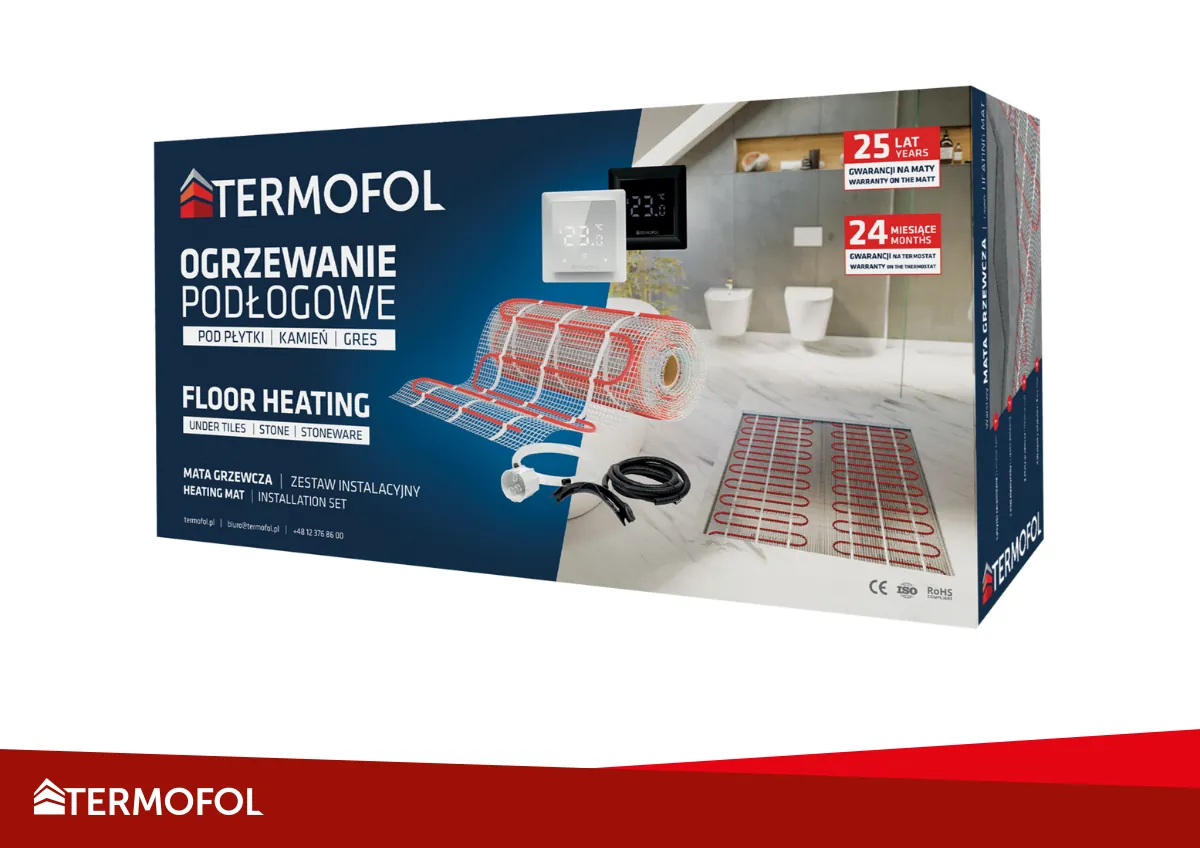
It works well where the finish requires glue or self-leveling compound.
Choosing Heating Power
The appropriate power affects the comfort and efficiency of the system.
The most typical power values:
- 60-80 W/m² for well-insulated apartments,
- 140 W/m² in older buildings.
The power should be selected so that the system operates as briefly as possible but effectively — this keeps energy consumption low.
Choosing a Thermostat – Key to Comfort and Savings
The thermostat is the most important control element.
It is responsible for maintaining temperature, planning schedules, and optimizing energy consumption.
Most commonly chosen models:
- TF-H7 WiFi – smartphone control, scheduling,
- TF-H5 WiFi – large screen, precise dial, energy consumption monitoring,
- TF-H1 – simple and intuitive, for those who value basic functionality.
With thermostats, you can set different temperatures:
- at night,
- during work,
- while away,
- on days off.
How to Plan the Installation – Step by Step
Step 1 — Measure the Area
Measure the net area, i.e., without furniture and fittings.
Step 2 — Choose Rooms to Heat
The most commonly heated are: living room, bedrooms, office, and bathroom.
Step 3 — Choose Heating Film or Mat
Adjust the width of the film (50 cm, 80 cm, or 100 cm) to cover as much of the room as possible.
Step 4 — Install the Temperature Sensor
The floor sensor provides stability and protects the floor from overheating.
Step 5 — Installation by an Electrician
The installation should be carried out by a person with the appropriate qualifications.
Energy Consumption – What You Should Know?
In a well-designed system, heating operates cyclically, and the thermostat ensures optimal consumption.
In practice, this means stable, predictable costs and the possibility of connecting heating to a photovoltaic system.
FAQ – Frequently Asked Questions about Electric Underfloor Heating in Apartments
Is underfloor heating suitable for panels?
Yes — heating films are designed specifically for floating floors.
Can the system be the only source of heat in the apartment?
Yes, with the appropriate power and zoning.
Do I need to report the installation to the administration?
Usually not, unless you plan to modernize the electrical installation.
Is the heating mat suitable for the bathroom?
Yes — it is the most commonly used solution under tiles.
Will underfloor heating raise the floor height?
The film will not — it is less than 0.4 mm thick. Mats raise the level minimally.
Planning electric underfloor heating in an apartment is not complicated, but it requires thoughtful decisions: defining zones, selecting power, and choosing the right thermostat.
A well-planned system ensures high comfort, predictable costs, and maintenance-free operation throughout the year.
If you are renovating your apartment or looking for a modern alternative to traditional radiators, electric underfloor heating is one of the most efficient and convenient options.
 +48 12 376 86 00
  Downloads
  biuro@termofol.pl


 Blog Termofol
 Published: November 19, 2025
  Reading time: 4 minutes
 General information