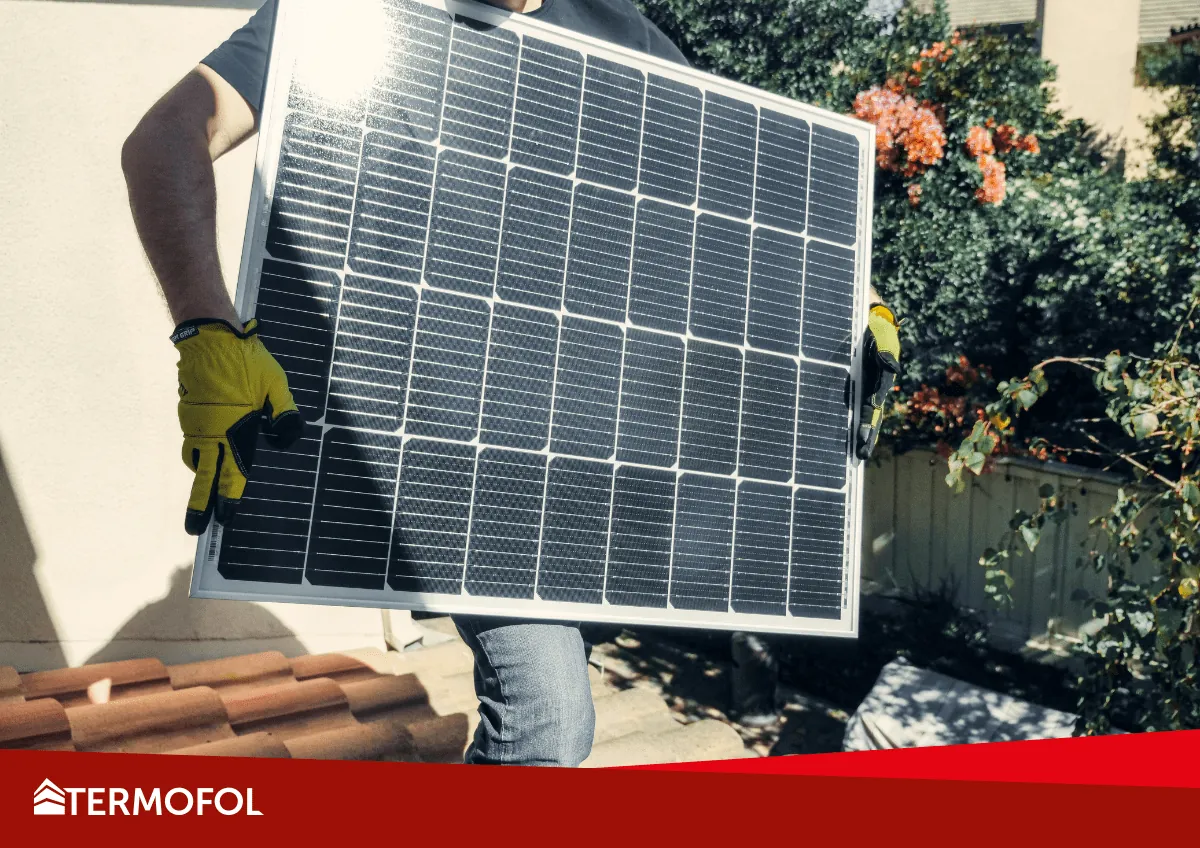
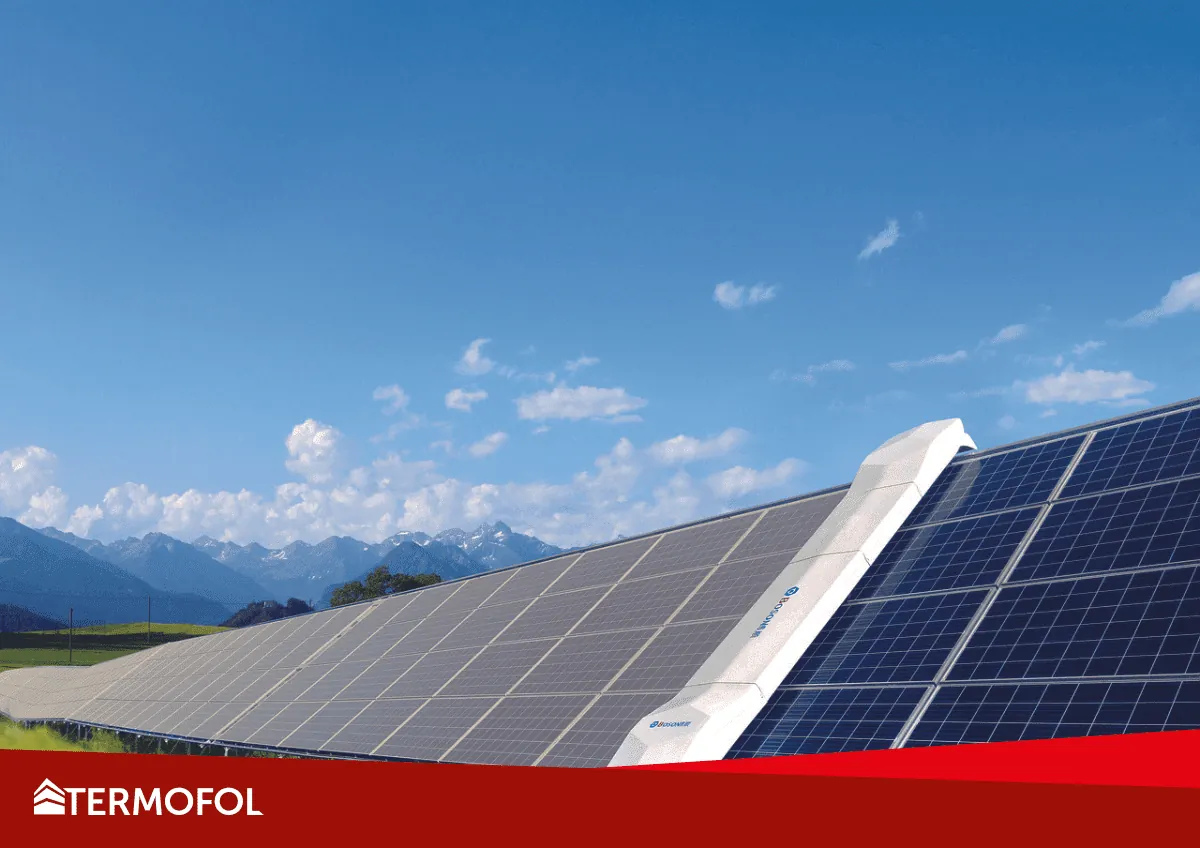
During the energy transformation, modules and photovoltaic panels play a key role. Thanks to their ability to convert solar radiation into electrical energy, these innovative devices form the foundation of a new era in renewable energy. In this article, we will answer the question of what a module is, how a PV panel works, and what types exist.
PV Module – What Is It?
Before we consider the differences between a PV module and a PV panel, it is worth taking a look at the abbreviation that accompanies these concepts. What does PV mean? This term comes from the English word “photovoltaics,” which translates to photovoltaics. Thus, a PV module is simply a photovoltaic module, while a PV panel is a photovoltaic panel.
Construction of a Photovoltaic Panel
To understand the difference between a panel and a PV module, it is also necessary to examine the construction of a photovoltaic panel. Each PV module consists of photovoltaic cells made of silicon. The operation of these cells involves converting solar energy into electrical energy, generating direct current, which is then sent to an inverter. In the inverter, the direct current is converted into alternating current, ready to power outlets in buildings and various electrical devices.
How Does Photovoltaics Work?
To understand the difference between these two concepts, it is also worth learning how a photovoltaic panel works. Each individual silicon wafer consists of two layers separated by a potential barrier. The upper negative layer contains an excess of electrons, while the lower layer is positive and characterized by a deficiency of electrons. When a photon strikes the upper layer of the cell, it releases additional electrons, creating a potential difference. The circuit closes through the electrical energy receiver, resulting in the flow of current between the plates – this is known as the photoelectric effect.
Read also:
Inverter, microinverter, solar panel power optimizer – what are they and which one to choose?
Photovoltaic cells are assembled into modules, or PV panels, connected in series, creating a kind of chain. When arranged parallel to each other, they create what is known as a photovoltaic matrix.
It is important for the module to operate at maximum efficiency, ensuring that the entire system achieves the highest level of effectiveness and increasing its durability. A PV module is therefore one of the fundamental components that make up a photovoltaic panel.
Types of Photovoltaic Panels
Photovoltaic panels are divided into:
- monocrystalline,
- polycrystalline.
The differences between these two types of PV panels arise from the production method. In the case of polycrystalline panels, the first step is the crystallization of silicon, which serves to remove impurities. This process occurs at a temperature of 1500 degrees, leading to the formation of a silicon block, which is then sliced into wafers, creating a photovoltaic cell.
The name of the monocrystalline panel informs us about its construction – “mono” means single. The cell from this type of PV panel is made from a single piece of crystal, allowing electrons to move freely. However, the production process is more complex.
In this process, known as the Czochralski method, polycrystalline silicon, with a high degree of purity, is added to the interior of a crucible, melting it into a uniform mass at a temperature of 1500 degrees. A seed crystal is then placed in the molten material, from which a full-sized crystal will grow over time. This process occurs gradually – it takes about 48 hours. Finally, the seed is slowly removed, leaving behind a large, cylindrical monocrystalline silicon crystal.
Which Is More Cost-Effective?
Now that we know the technical differences, it is important to understand the yields from each type of PV panel. The efficiency of polycrystalline panels ranges from 14-16%, which results from several factors. Primarily, the joined crystals do not provide sufficient freedom of movement for electrons. In the case of higher-quality polycrystalline cells, larger crystals are observed. The fewer the number of crystals, the greater the freedom of movement for electrons, which translates into higher cell efficiency.
You might be interested in:
Photovoltaic principles in 2023. Does a photovoltaic installation require a permit or just notification?
The greatest advantage of monocrystalline cells is their high efficiency. Panels of average quality typically achieve efficiencies between 16 and 20%. Another benefit is the lower temperature coefficient of monocrystalline cells. Photovoltaic panels generally operate more efficiently at lower temperatures, and any increase in temperature, even by one degree Celsius, leads to a loss of efficiency. Monocrystalline panels perform better in this regard, which is particularly advantageous in conditions where temperatures are much higher.
Photovoltaics also works well in the climate of Poland, where conditions are favorable for both monocrystalline and polycrystalline panels. This may be surprising when we realize that the climate in Poland is not at all less favorable for PV panels than, for example, in hot Africa.
This information is crucial, especially in light of the recent turmoil in the photovoltaic industry. Although it may seem that a PV installation does not work in winter, thanks to devices such as PV modules, PV panels, and optimizers, it is still possible to produce electricity from the Sun during this time of year.
A Few Words to Conclude
To fully harness the potential of these devices, it is necessary to be aware of several important issues regarding energy consumption. The new settlement system (net-billing) promotes self-consumption, meaning that when investing in photovoltaics, one should aim to consume as much of the generated energy as possible. How can this be achieved?
The simplest, albeit quite expensive, solution is to purchase a energy storage system. They are not yet very popular in Poland, although last year's edition of the photovoltaic funding program “My Electricity” included an option for subsidies for this device.
Another solution is to invest in an electric infrared heating system that will consume the produced energy. This way, there is no need to sell electricity at low rates, and one can use it according to their own needs.
 +48 12 376 86 00
  Downloads
  biuro@termofol.pl


 Blog Termofol
 Published: December 1, 2023
  Reading time: 5 minutes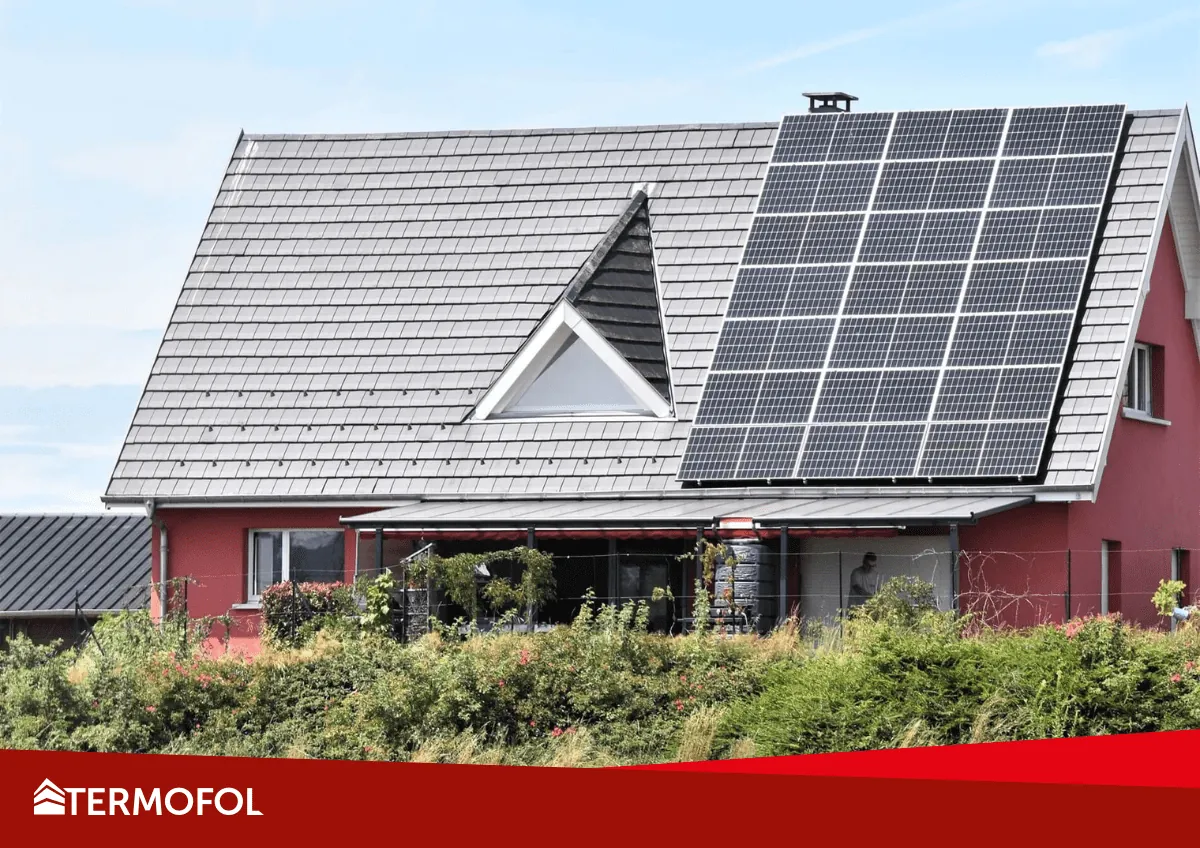
 Photovoltaics