Heating mats are no longer just for bathroom heating
For years, heating mats were mainly associated with a comfortable addition installed under tiles in the bathroom. Today, their applications are much broader. Modern electric underfloor heating is increasingly found in living rooms, bedrooms, investment apartments, offices, service premises, and even modern commercial buildings.
The reason is simple — the approach to building heating has changed. The following factors are becoming increasingly important:
- energy efficiency,
- interior aesthetics,
- ease of installation,
- the possibility of intelligent temperature control,
- compatibility with photovoltaics.
Heating mats fit well with the needs of modern construction, which is why their use is constantly increasing.
Main heating or comfortable supplementary heating?
This is one of the most frequently asked questions when choosing a heating system.
In practice, heating mats can serve two functions:
- comfortable supplementary heating of the room,
- the main source of heating.
In many apartments, the system is primarily used to improve user comfort. This is especially true for bathrooms, kitchens, or rooms with ceramic tiles, where a warm floor is most noticeable.
However, increasingly heating mats are also designed as a full-fledged heating system for the entire building. In modern energy-efficient homes with good thermal insulation and intelligent temperature control, electric underfloor heating can successfully heat all rooms.
The development of photovoltaics is also significant here. The combination of PV installations with electric heating leads many investors to consciously abandon traditional boiler rooms in favor of simpler and more modern solutions.
Bathroom — the most popular installation location
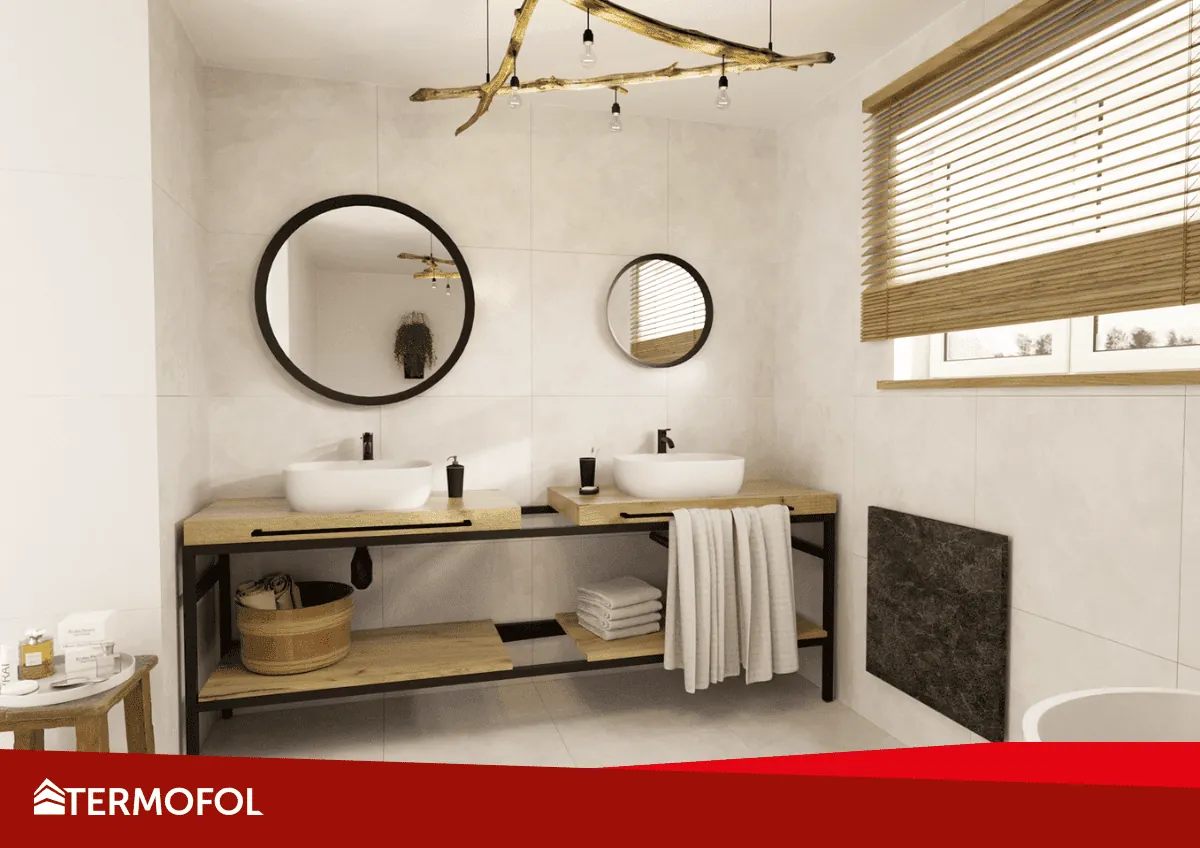
Bathrooms remain the most common place for installing heating mats. The reason is very practical — ceramic tiles quickly release heat and can be uncomfortably cold without underfloor heating.
A warm floor after stepping out of the shower or on a chilly morning significantly improves the comfort of daily bathroom use. Additionally, underfloor heating helps dry the floor surface faster and reduces the feeling of dampness in the room.
A major advantage is also the simple installation. Heating mats can be relatively easily applied even during the renovation of an existing bathroom without the need for extensive construction work.
Kitchen and living room — increasingly popular applications
Just a few years ago, electric underfloor heating in the living room was a solution mainly found in premium homes. Today, more and more investors are choosing heating mats for everyday living spaces as well.
In modern interiors, it is very common to use:
- large tiles,
- gres,
- vinyl floors,
- open living spaces.
In such implementations, the comfort of a warm floor is particularly felt. Additionally, the absence of traditional radiators allows for better space utilization and the creation of more minimalist arrangements.
In living rooms, underfloor heating often serves as the main heating system or supports another heat source, improving the comfort of the interior.
Heating mats in attics
Attics are among the most demanding spaces in terms of heating. Large slopes, variable temperatures, and a more challenging heat distribution mean that traditional radiators do not always work optimally there.
Heating mats perform very well in such interiors because they release heat evenly from the floor upwards. This allows the room to warm up more naturally and comfortably.
An additional advantage is the lack of the need to install radiators on knee walls, where usable space is often limited.
In practice, underfloor heating in attics often allows for significantly better utilization of available space.
Investment apartments and rental units
Modern investment apartments are increasingly equipped with electric underfloor heating.
There are several reasons for this:
- no need to build a boiler room,
- simpler installation,
- modern interior appearance,
- fewer components requiring servicing,
- the possibility of individual temperature control.
For investors, the maintenance-free nature of the system and the ability for the apartment user to easily control the heating are also of significant importance.
Heating mats fit well into the modern model of premium apartments and short-term rental units.
Commercial applications
Heating mats are increasingly being used in commercial and service spaces as well. This includes:
- offices,
- showrooms,
- boutiques,
- beauty salons,
- showrooms,
- hotel apartments.
In such places, the aesthetics of the interior and the ability to freely arrange the space without visible radiators are of great importance.
Additionally, underfloor heating improves the comfort of customers and employees, especially in rooms with a lot of tiles or stone surfaces.
In modern service premises, heating mats are often also used as an additional source of comfortable warmth in selected zones.
Unconventional applications of heating mats
The development of modern heating systems has led to heating mats being increasingly used in less obvious places.
The system can be found in:
- winter gardens,
- usable attics,
- summer houses,
- mobile offices,
- small service premises,
- modern housing containers.
In such implementations, the quick installation, small thickness of the system, and the lack of need for extensive hydraulic installations turn out to be significant advantages.
Why are heating mats so versatile?
The popularity of heating mats primarily stems from their flexibility of application. The system can function both as comfortable supplementary heating for a single room and as a full-fledged heating system for a modern home.
Modern temperature control, compatibility with photovoltaics, and the absence of visible heating elements make electric underfloor heating very well suited to the needs of contemporary construction.
This is why heating mats are increasingly found not only in bathrooms but also in living rooms, premium apartments, offices, and modern commercial spaces.
 +48 12 376 86 00
  Downloads
  biuro@termofol.pl


 Blog Termofol
 Published: May 17, 2026
  Reading time: 5 minutes
 General information