Underfloor heating has become the standard in modern interiors
Just a few years ago, heating mats were mainly associated with an enhancement of comfort in the bathroom. Today, the situation is completely different. Modern electric underfloor heating is increasingly becoming a conscious choice for investors building energy-efficient homes, renovating apartments, or designing modern apartments.
User expectations have changed. Contemporary interiors are meant to be minimalist, comfortable, and functional, and the heating system itself should operate efficiently, require minimal maintenance, and interfere as little as possible with the living space.
This is precisely why heating mats have gained such popularity in both new investments and during the modernization of older buildings.
The comfort of warm floors felt every day
The greatest advantage of heating mats is the way they influence the daily comfort of using the interior. It is hard to compare a classic, cold floor with a surface that remains pleasantly warm from the first steps after waking up.
The difference is particularly noticeable in:
- bathrooms,
- kitchens,
- living rooms with tiles,
- children's rooms,
- ground floor apartments.
In practice, many people only notice how much underfloor heating affects their daily well-being and comfort of staying at home after its installation.
Modern heating mats heat up quickly and evenly distribute warmth across the entire floor surface. This results in a more stable temperature in the room, making the interior more pleasant to use, especially in autumn and winter.
A more natural temperature distribution in the room
In traditional heating systems, the highest temperature usually occurs near the radiator and under the ceiling. The floor, on the other hand, remains cooler, which often causes discomfort, even though theoretically, the air temperature is appropriate.
Heating mats work differently. Heat is evenly distributed from the floor upwards, resulting in a temperature distribution that is more natural for humans. This is why underfloor heating often provides a higher sense of comfort even at lower air temperatures than traditional radiators.
In practice, this means:
- more pleasant heat sensation,
- absence of cold zones,
- more uniform heating of the entire interior.
Heating that is invisible
One of the biggest changes that heating mats have introduced to modern interiors is the ability to completely hide the heating system.
The absence of traditional radiators allows for greater freedom in designing the space and enables the creation of more minimalist arrangements. In modern homes and apartments, a maximally clean form of the interior without visible installation elements is increasingly valued.
Thanks to underfloor heating:
- it's easier to arrange furniture,
- space can be better utilized,
- the interior looks more modern,
- nothing disrupts the aesthetics of the room.
This is why underfloor heating has become the standard in many modern premium projects.
Energy efficiency and modern temperature control
Over the years, many myths have arisen around electric heating related to operating costs. Meanwhile, modern heating mats operate quite differently than older electric systems from several years or even decades ago.
Currently, the following factors are of great importance:
- good insulation of the building,
- modern thermostats,
- control automation,
- the ability to program temperatures,
- cooperation with photovoltaic installations.
The system can operate only during specific hours and maintain different temperatures depending on the lifestyle of the household members. This way, the heating does not operate unnecessarily when no one is home.
Modern WiFi thermostats additionally allow temperature control from a mobile app. Users can manage heating even when they are away from home, significantly improving convenience and allowing for better control of energy consumption.
In properly insulated buildings, modern underfloor heating can help reduce energy consumption by up to about 20% compared to less efficient heating systems.
Less airborne dust and greater comfort for allergy sufferers
This is an advantage that is definitely talked about too rarely. Classic radiators cause intense air circulation, which leads to the lifting of dust and small allergens.
In the case of underfloor heating, air movement is much calmer and more natural. This helps to limit the lifting of:
- pollen,
- dust,
- small pollutants.
This is particularly important for allergy sufferers, families with children, and those sensitive to air quality in the home. In practice, many users notice an improvement in daily comfort after switching from traditional heating to underfloor heating.
An ideal solution for apartment renovations
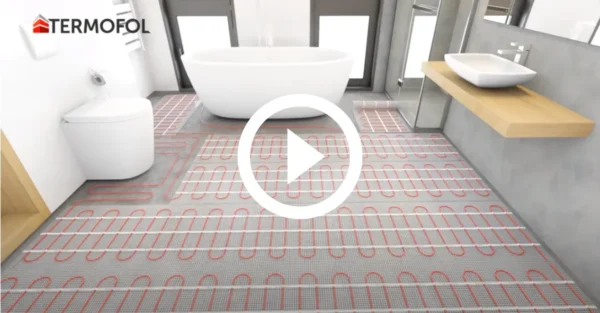
Heating mats work very well during renovations because they do not require a thick screed or an extensive hydraulic installation.
The system is installed directly under the tiles, which allows for:
- shortening the work time,
- limiting the scope of renovation,
- avoiding a significant rise in floor level.
This is why heating mats are so popular today in apartments, renovated bathrooms, and investment apartments.
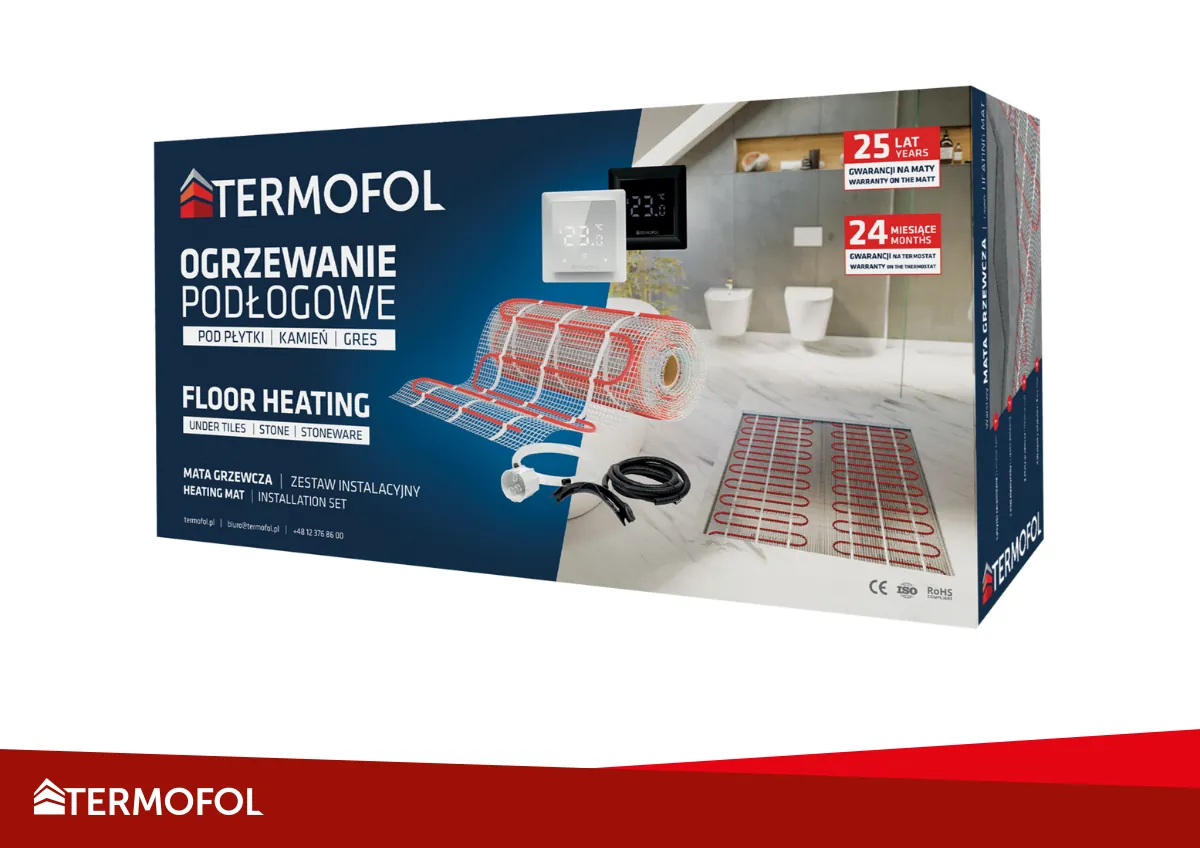
Additionally, ready-to-install TERMOFOL kits significantly simplify the entire installation process.
Heating mats and photovoltaics — a modern combination
The growing popularity of PV installations has led to electric heating being perceived quite differently than just a few years ago.
The combination of:
- heating mats,
- photovoltaics,
- intelligent control,
creates a modern heating system that aligns with the direction of energy-efficient and low-emission construction.
For many investors, this means:
- greater energy independence,
- a simpler installation system,
- no need to build a boiler room,
- modern and practically maintenance-free heating.
The popularity of heating mats does not stem solely from the comfort of warm floors. It is a result of the changing approach to interior design, energy efficiency, and the convenience of everyday home use.
Modern underfloor heating provides a more natural temperature distribution, improves the aesthetics of interiors, and allows for better utilization of living space. Additionally, the ability to cooperate with photovoltaics and intelligent control systems means that heating mats are increasingly becoming one of the most interesting solutions for contemporary construction.
 +48 12 376 86 00
  Downloads
  biuro@termofol.pl


 Blog Termofol
 Published: May 15, 2026
  Reading time: 5 minutes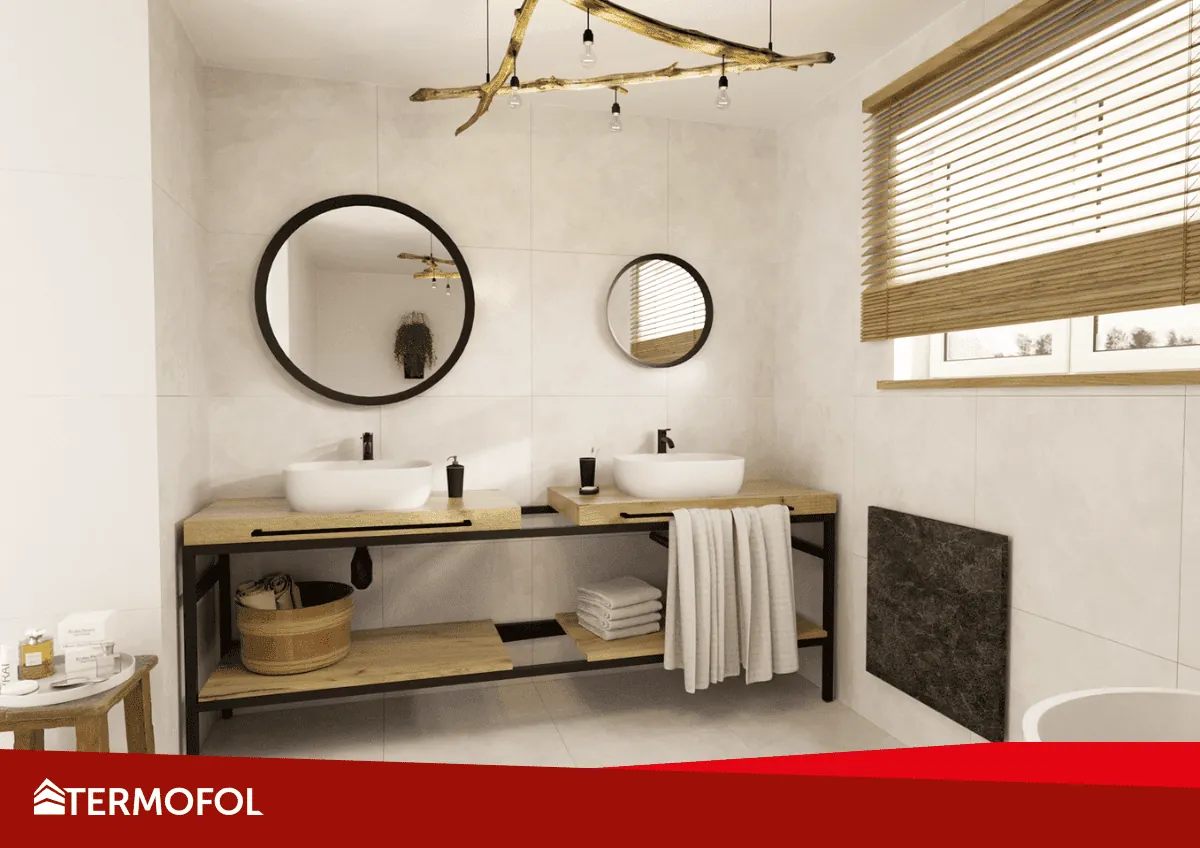
 General information