In 2027, the second phase of the emissions trading system – ETS2 (Emissions Trading System 2) – will come into effect. This is one of the most important climate solutions adopted by the European Union, which will cover previously overlooked sectors such as road transport and residential buildings. In practice, this means that heating homes with fossil fuels – gas, coal, or heating oil – will become more expensive.
For households and apartment owners, ETS2 is a significant signal that the future of heating will no longer rely on emission fuels. Rising costs of traditional heating sources make low-emission and zero-emission technologies, such as electric heating, increasingly important. It is also worth noting that by 2040, there are plans for a complete phase-out of fossil fuel boilers.
What Exactly is ETS2?
ETS2 is an extension of the existing ETS (Emissions Trading System), which has covered industry and energy for years. Under the new phase, emissions related to the use of fossil fuels in residential buildings will be included.
The mechanism is simple:
- suppliers of fossil fuels (gas, oil, coal) will have to purchase CO₂ emission allowances,
- the cost of these allowances will be passed on to end customers,
- as a result, heating prices for coal, gas, and heating oil will increase.
The aim of the directive is not only to reduce emissions but also to accelerate the energy transition. However, for ordinary users, this primarily means rising bills.
👉 Key takeaway: ETS2 will increase the competitiveness of electric heating and renewable energy systems compared to fossil fuels.
How Will ETS2 Affect Traditional Heating Costs?
Natural Gas
Currently, gas is one of the most commonly chosen sources of heat in new homes. However, under ETS2, every cubic meter of gas burned in a boiler will incur additional emission fees. It is estimated that heating bills for gas may increase by several to dozens of percent, depending on the price of emission allowances.
Coal
This fuel has the highest emissions. Every ton of burned coal generates very large amounts of CO₂, which under ETS2 means the highest possible additional costs. Coal heating has already been losing significance, and in the coming years it will become even less economical.
Heating Oil
Oil is also a fossil fuel and is subject to ETS2. Heating costs with oil may increase to a similar extent as with gas, making this heating method even less popular.
👉 In practice, ETS2 acts like a carbon tax – the more emission-intensive the heat source, the greater the financial burden.
By How Much Will Heating Costs Increase Due to ETS2?
Analyses show that the introduction of ETS2 means a clear increase in bills for households using fossil fuels. For example:
-
Gas Heating – additional cost of about 0.40–0.45 PLN per m³, which amounts to even 1000 PLN per year for a typical home.
-
Coal Heating – increase of 500–550 PLN per ton, which averages 2000 PLN per year.
-
Heating Oil – additional 0.55–0.60 PLN per liter, translating to about 1000 PLN per year.
-
Pellets, Electric Heating – no additional fees, as they are neutral in terms of CO₂ emissions.
👉 Conclusion: the higher the emissions of the fuel, the greater the financial burden. Therefore, electric heating, heat pumps, or pellets are becoming the most cost-effective solutions in light of ETS2.
Why is Electric Heating Becoming a Natural Alternative?
Electric heating is completely free of local CO₂ emissions. At the time of use, no fuels are burned, so the system is not subject to ETS2 fees. This means:
- stable operating costs – no additional emission fees,
- easy integration with photovoltaics – own energy from PV panels can reduce bills to almost zero,
- maintenance-free – no boiler room, boiler inspections, chimney replacements, or fuel feeder changes,
- cleanliness and convenience – no ash, dust, or risk of carbon monoxide poisoning.
Therefore, electric heating is not only more convenient but also safer for household budgets in light of upcoming regulations.
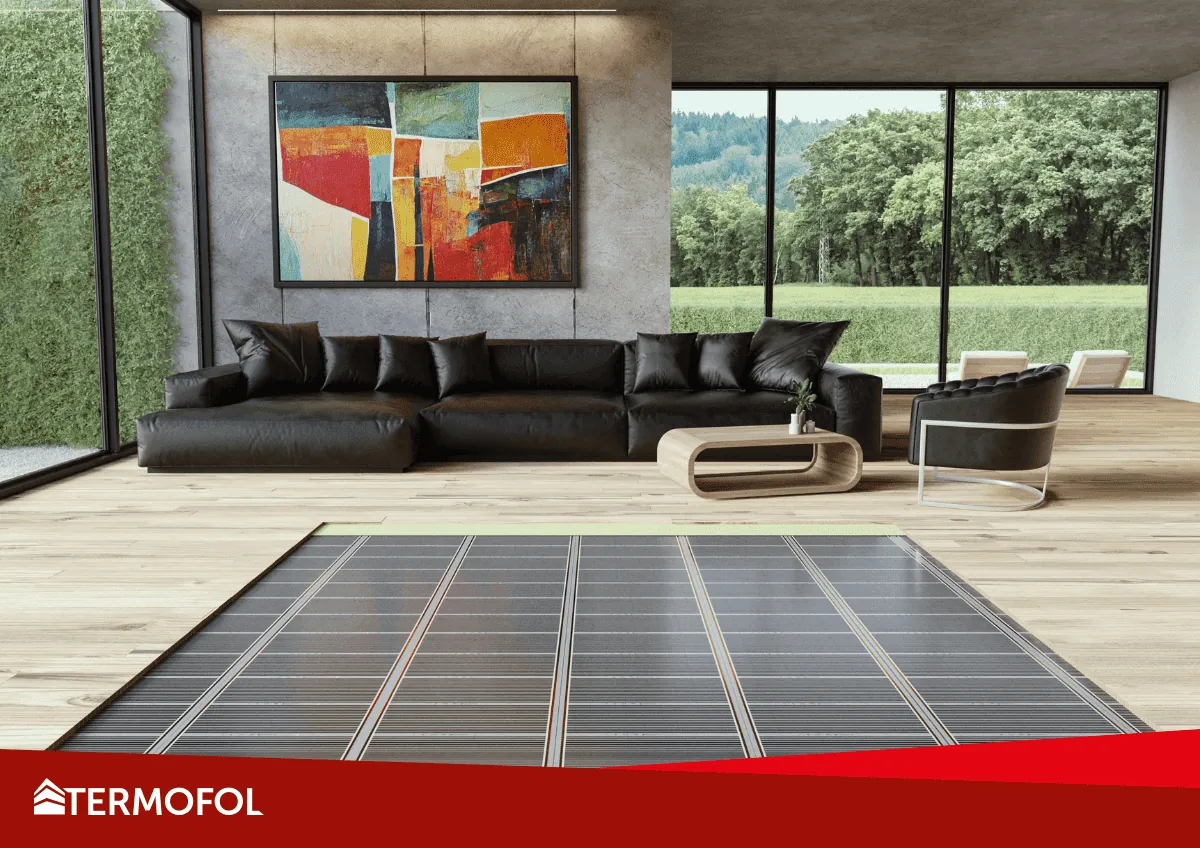
Termofol Heating Films – Comfort at Your Feet
One of the most commonly chosen solutions among electric systems is Termofol heating films. Their advantages include:
- installation under laminate panels, SPC vinyl, or engineered wood,
- even heat distribution across the entire floor surface,
- no visible elements – system hidden under the floor,
- quick heating time and pleasant feeling of warm floors,
- heating film means no service costs and emissions.
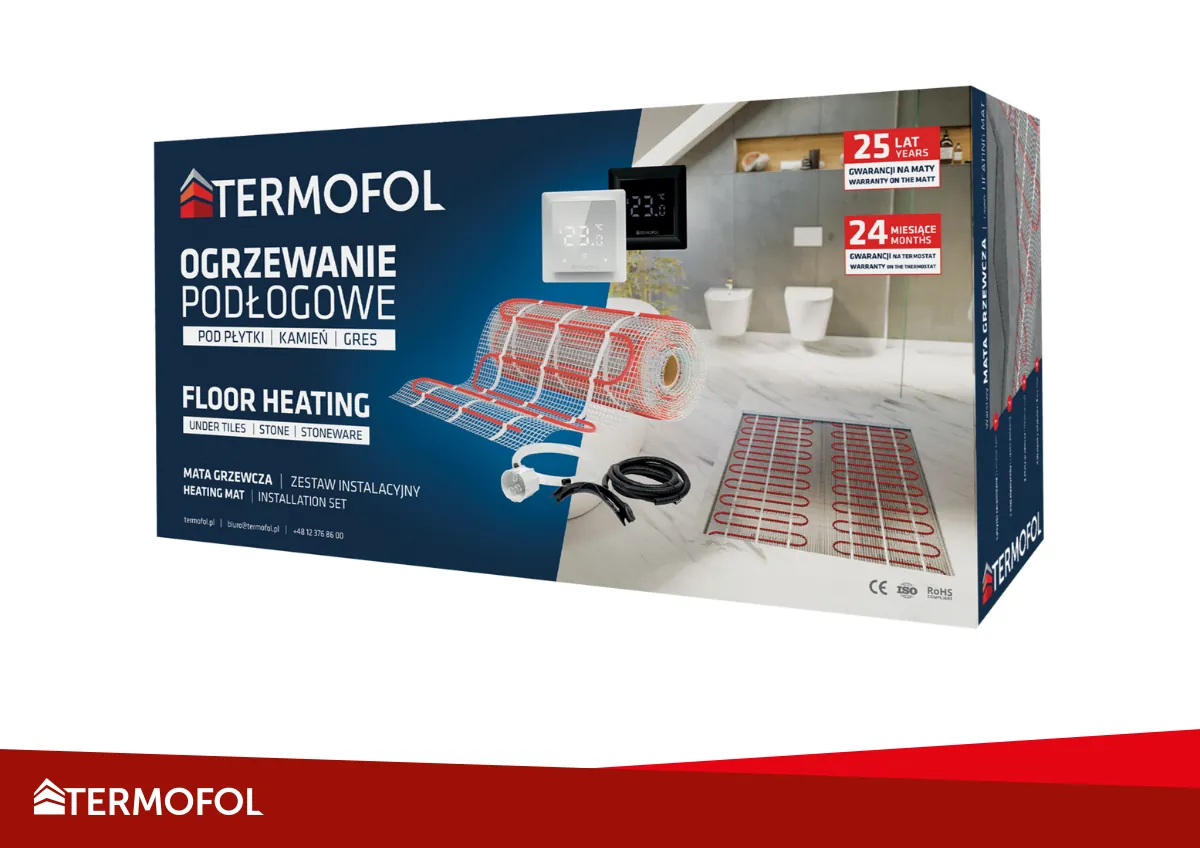
Termofol Heating Mats – The Best Under Tiles
The second popular solution is Termofol heating mats. They are particularly effective in bathrooms, kitchens, and hallways where ceramic tiles dominate.
Advantages of heating mats:
- thin construction allows installation without significantly raising the floor level,
- quick heating of the floor,
- high durability and reliability,
- easy control thanks to modern thermostats.
Electric Panels and Heaters – Flexible Heat Sources
Complementing the films and mats are Termofol heating panels and electric heaters. They serve as additional heat sources in living rooms, bedrooms, or offices. With elegant design and infrared technology, they serve both decorative and practical functions.
Benefits of Electric Heating in Light of ETS2
- No CO₂ emission costs – users do not pay for emission allowances that will burden gas, coal, and oil.
- Energy efficiency – Termofol systems work with thermostats and mobile applications, allowing precise control of energy consumption.
- Ecology – the absence of exhaust emissions and dust improves air quality in the home and surroundings.
- Health safety – electric heating does not generate the risk of carbon monoxide poisoning or allergies related to dust convection.
- Integration with renewable energy sources – the possibility of powering from photovoltaic installations offers real savings and independence from rising energy prices in the market.
ETS2 is a breakthrough in EU energy policy. The new directive will change the way European residents view the choice of heating systems. Traditional fossil fuel-based sources will become increasingly expensive and less economical, while electric heating – heating films, mats, and heating panels from Termofol – will gain importance as a stable, safe, and ecological alternative.
👉 Choosing electric heating is not just an investment in comfort but also in a future free from additional emission costs and rising bills.
 +48 12 376 86 00
  Downloads
  biuro@termofol.pl


 Blog Termofol
 Published: October 6, 2025
  Reading time: 5 minutes
 General information